Read the full article to gain deeper insights and comprehensive information.

Sep 16, 2026
0
Learn about the semi-automatic makhana popping machine, its working process, business requirements, investment, benefits, and opportunities in makhana processing.

What is a Semi-Automatic Makhana Popping Machine?
Why is Makhana Popping Important?
How the Machine Works
Raw Materials Required
Makhana Popping Process
Machinery and Equipment Required
Investment Required
Benefits of a Semi-Automatic Makhana Popping Machine
Who Can Start This Business?
Factors to Consider Before Buying a Makhana Popping Machine
Business Opportunities with Makhana Processing
How StartupHyper Can Help
Frequently Asked Questions
Conclusion
A semi-automatic makhana popping machine is a food-processing machine designed to help convert raw makhana seeds into popped makhana through controlled heating and processing. It reduces the amount of manual effort required during the popping operation and helps make the process more systematic.
Unlike a fully automatic machine, a semi-automatic machine requires an operator to perform certain activities such as feeding the raw material, monitoring the heating process, and handling the popped makhana. It can be suitable for small and medium-scale makhana processing businesses that want to introduce machinery without setting up a completely automated production line.
Makhana popping is an important step in makhana processing because it converts raw makhana seeds into an edible, lightweight, and marketable product. Proper popping improves the texture, appearance, and usability of makhana and makes it suitable for direct consumption, roasting, seasoning, and packaging. It also creates opportunities for value addition and commercial processing.
Popping transforms raw makhana seeds into the familiar white, light, and crispy makhana that consumers commonly use as a snack. This makes the product ready for further processing, seasoning, and consumption.
Properly popped makhana becomes a more market-ready product compared with raw seeds. It can be graded, processed, packaged, and sold through different market channels.
Popped makhana can be used to prepare roasted, salted, masala, and flavoured makhana products. This allows processors to develop different varieties according to customer preferences and market demand.
Suitable popping equipment makes the heating and popping process more systematic and can reduce some manual effort. It also helps the operator manage the processing operation in a more organised way.
After popping, makhana can be graded, seasoned, weighed, and packed in different pack sizes. Attractive packaging and branding can help businesses sell the finished product in retail and other markets.
A semi-automatic makhana popping machine works by applying controlled heat to raw makhana seeds so that they expand and become properly popped. The operator is involved in activities such as feeding the seeds, monitoring the heating process, and removing the finished makhana. The basic working process can be understood through the following steps.
The cleaned and graded raw makhana seeds are placed into the machine by the operator. Proper feeding helps ensure that the seeds receive suitable heat during processing. The quantity of makhana should be managed according to the machine's capacity and operating instructions.
The machine provides controlled and uniform heat to the makhana seeds. The operator monitors the heating conditions according to the machine manufacturer's recommended operating procedure. Proper heating is important because insufficient or excessive heat can affect the popping quality and final texture.
When the seeds receive the required heat, they expand and pop, forming the familiar white and lightweight makhana. The operator monitors the process to ensure that the makhana is processed properly. Correct popping helps produce a well-expanded and suitable-quality product for further processing.
After popping is complete, the popped makhana is removed from the machine by the operator. It is then taken for further processing such as cooling, sorting, or grading. This helps prepare the product for quality checking and subsequent packaging or seasoning.
The popped makhana is allowed to cool before further handling. Cooling makes it easier to handle and inspect the processed product. Broken, burnt, or unpopped pieces can then be separated to maintain the quality and appearance of the finished makhana.
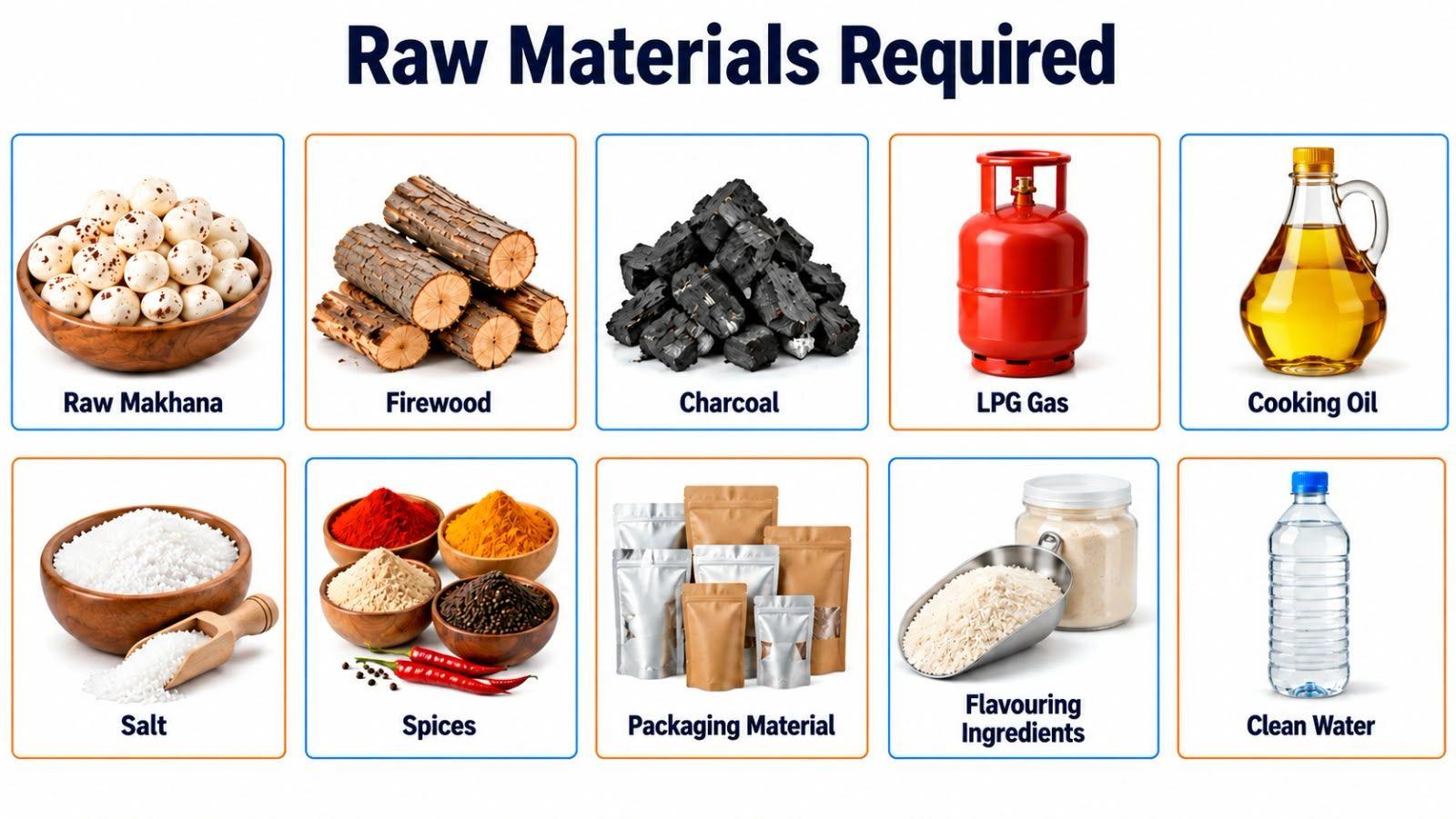
A makhana popping business requires raw makhana along with different materials used for heating, seasoning, cleaning, and packaging. The exact requirement depends on the type of popping machine and whether the business produces plain, roasted, or flavoured makhana. Proper-quality raw materials help maintain product quality, hygiene, taste, and shelf life.
a. Raw Makhana
b. Firewood
c. Charcoal
d. LPG Gas
e. Cooking Oil
f. Salt
g. Spices
h. Packaging Material
i. Flavouring Ingredients
j. Clean Water
The makhana popping process involves several stages, starting from the selection of raw makhana and ending with cooling, sorting, seasoning, and packaging. A proper process helps maintain consistent popping, product quality, hygiene, and better handling during processing.
Select good-quality raw makhana seeds according to their size, quality, and condition. The seeds should be suitable for popping and free from excessive impurities or damaged pieces. Proper selection helps achieve better popping results and improves the quality of the final product.
Clean the selected raw makhana to remove dust, dirt, and other unwanted materials. Proper cleaning is important for maintaining hygiene during the processing operation. It also helps ensure that unwanted particles do not enter the popping machine.
Grade the cleaned makhana according to their size and quality before feeding them into the machine. Similar-sized seeds can provide more consistent heating during processing. Proper grading also helps in producing a more uniform finished product.
Prepare the semi-automatic makhana popping machine according to the manufacturer's operating instructions. Check the heating system, fuel or power supply, and other important machine components before starting. Proper preparation helps the machine operate smoothly during the popping process.
Feed the selected makhana into the machine in the appropriate quantity according to its capacity. Avoid overloading the machine because it may affect the heating and popping process. Proper feeding allows the makhana to receive sufficient and uniform heat.
The machine heats the makhana using the required heating method and operating conditions. The operator monitors the heating process and maintains the conditions recommended for the machine. Proper heating is important for achieving good popping without excessive burning or under-processing.
When the makhana receives the required heat, the seeds expand and pop to form the familiar white and lightweight product. The operator monitors the process to ensure that the popping takes place properly. Correct popping helps achieve better texture, appearance, and product quality.
After the popping process is completed, the popped makhana is removed from the machine by the operator. It should be handled carefully to minimise unnecessary breakage. The removed product is then taken for cooling and further quality checking.
The popped makhana is allowed to cool naturally before further processing. Cooling makes the product easier to handle and helps prevent problems during seasoning and packaging. The cooled makhana can then be moved to the sorting and grading stage.
The cooled makhana is checked and separated according to quality, size, and appearance. Burnt, broken, or unpopped pieces can be removed from the suitable finished product. This helps maintain a more consistent quality in the makhana prepared for sale.
For flavoured makhana products, the popped makhana is mixed with salt, spices, or other flavouring ingredients. The ingredients should be distributed evenly over the product to provide consistent taste. Plain makhana can skip this stage if no seasoning is required.
The finished makhana is weighed and packed in suitable food-grade packaging material. The packets should be properly sealed to protect the product from moisture, dust, and contamination. Appropriate packaging also makes the product convenient for storage, transportation, and retail sale.
The packed makhana should be stored in a clean, dry, and suitable environment before dispatch. Proper storage helps maintain the quality of the packaged product until it reaches the customer. The finished products can then be supplied to retailers, wholesalers, distributors, or other buyers.
A makhana processing unit requires different types of machinery and equipment for cleaning, grading, popping, seasoning, weighing, and packaging. The exact equipment requirement depends on the production capacity, level of automation, product type, and business scale. A semi-automatic setup can combine machine-based processing with operator involvement.
| Machinery/Equipment | Purpose |
|---|---|
| Makhana Popping Machine | Used for heating and popping raw makhana seeds. |
| Cleaning Equipment | Used to remove dust, dirt, and unwanted particles from raw makhana. |
| Grading Machine | Used to separate makhana according to size and quality. |
| Sorting Table | Used for manual inspection and removal of unsuitable pieces. |
| Weighing Machine | Used to measure raw materials and finished makhana accurately. |
| Seasoning Machine | Used for mixing salt, spices, and flavouring ingredients with popped makhana. |
| Packaging Machine | Used to fill and pack makhana into suitable packets. |
| Sealing Machine | Used to seal the packaging properly and protect the product. |
| Batch Coding Machine | Used to print batch numbers, dates, and other required information on packages. |
| Storage Containers/Racks | Used for hygienic storage of raw materials and finished products. |
The machinery required may vary according to the production capacity, processing method, available space, and level of automation. Entrepreneurs should compare machine specifications, capacity, power or fuel requirements, maintenance needs, and after-sales support before purchasing equipment.
A semi-automatic makhana popping business requires investment in machinery, workspace, raw materials, packaging, utilities, labour, and working capital. The total investment depends on the production capacity, machine model, level of automation, and size of the processing unit.
| Investment Component | Approximate Cost |
|---|---|
| Semi-Automatic Makhana Popping Machine | ₹2–6 lakh |
| Cleaning & Grading Equipment | ₹50,000–₹2 lakh |
| Weighing & Sorting Equipment | ₹20,000–₹75,000 |
| Seasoning Equipment | ₹40,000–₹1.5 lakh |
| Packaging & Sealing Equipment | ₹50,000–₹2 lakh |
| Electrical/Fuel Setup | ₹25,000–₹75,000 |
| Workspace Setup | ₹50,000–₹2 lakh |
| Initial Raw Material | ₹1–3 lakh |
| Packaging Material | ₹25,000–₹75,000 |
| Working Capital | ₹1–3 lakh |
| Estimated Total Investment | ₹6.6–21.75 lakh |
These are indicative planning estimates, not fixed market prices. Actual costs can vary based on machine capacity, manufacturer, location, production scale, raw-material prices, and the type of packaging system selected.
A semi-automatic makhana popping machine can help businesses make the popping process more systematic, efficient, and manageable compared with completely manual processing. It reduces some manual effort while still allowing the operator to control important processing activities. The machine can be useful for small and medium-scale businesses looking to improve production capacity, consistency, and product quality.
The machine reduces the amount of manual work required during the heating and popping process. The operator mainly needs to feed the raw makhana, monitor the operation, and remove the popped product. This can make the overall processing work easier to manage.
A semi-automatic machine can help process makhana in a more organised and continuous manner. It can handle a suitable quantity of raw makhana according to its capacity, allowing the business to process more product compared with a completely manual setup.
The machine is designed to provide controlled heating during the popping process. Proper heating can help reduce problems such as under-popped or excessively burnt makhana. This supports more consistent processing when the machine is operated according to the recommended conditions.
Using a machine can help maintain greater consistency in the popping process. When similar operating conditions are maintained, the resulting makhana can have more uniform texture and appearance. This is useful for businesses supplying products to regular customers and markets.
Semi-automatic machines can be suitable for small and medium-scale makhana processing units that may not require a completely automated production line. They provide machinery support while still allowing operators to perform important processing activities manually.
A semi-automatic machine can help a business increase its processing capacity as demand grows. Better processing efficiency can support the production of larger quantities of makhana for retailers, wholesalers, distributors, and other buyers.
After popping, makhana can be further processed into roasted, salted, masala, and flavoured products. A semi-automatic popping setup can therefore support businesses that want to develop different makhana products and increase their value in the market.
A semi-automatic makhana popping business can be started by individuals or businesses that have access to raw makhana, suitable workspace, and the required investment. The business can be operated on a small, medium, or commercial scale depending on production capacity and market demand.
People who want to start a food processing business can consider makhana popping as an option. A semi-automatic machine allows them to introduce machinery into the process without requiring a completely automated production setup.
Makhana traders who already purchase and sell raw makhana can use a popping machine to move towards value-added processing. Instead of selling only raw makhana, they can process, grade, season, and package the product for different markets.
Farmers and producer groups involved in makhana cultivation can use processing equipment to add value to their raw produce. Processing closer to the source can create opportunities to sell finished or semi-processed makhana products.
Existing food processing businesses can add popped makhana products to their product range. They can use the machine for producing plain, roasted, salted, or flavoured makhana according to their business requirements.
Small and medium enterprises looking to expand into snack food manufacturing can consider this business. A semi-automatic setup can provide a balance between machine-based processing and operator involvement.
Wholesalers and retailers who already have established sales and distribution channels can enter makhana processing by adding their own processed and packaged products. This can help them participate in more stages of the product's value chain.
Before purchasing a makhana popping machine, entrepreneurs should consider factors such as production requirements, machine capacity, operating cost, quality, and maintenance needs. Choosing the right machine according to the business scale, available budget, workspace, and expected production volume can help in making the processing operation more efficient and practical.
i. Machine Capacity
ii. Production Output
iii. Heating Method
iv. Fuel or Power Requirement
v. Machine Quality
vi. Ease of Operation
vii. Maintenance Requirement
viii. Space Requirement
ix. Machine Price
x. After-Sales Service
Makhana processing offers several business opportunities beyond simply popping raw makhana. Entrepreneurs can develop different products, packaging formats, and sales channels according to customer demand, investment capacity, and market requirements. Value-added processing can also help businesses create their own brands and reach different customer segments.
Popped makhana can be sold as a basic processed product after proper popping, cooling, sorting, and grading. It can be supplied to wholesalers, retailers, snack businesses, and other food processors.
Roasted makhana can be prepared by roasting popped makhana to develop a crispier texture and suitable taste. It can be sold as a ready-to-eat snack in different pack sizes for retail customers.
Entrepreneurs can produce flavoured makhana by adding ingredients such as salt, spices, herbs, or other flavouring materials. Different flavours can be developed to provide more product choices and target different customer preferences.
Processed makhana can be weighed and packed in different sizes and packaging formats for retail sale. Businesses can develop their own packaging and branding to sell products through local stores, supermarkets, online platforms, and distributors.
Makhana processors can supply bulk quantities of popped, roasted, or flavoured makhana to wholesalers, retailers, restaurants, snack manufacturers, and other businesses. Bulk supply can create regular business relationships with buyers.
A processing business can manufacture makhana products for other brands under private-label arrangements. This allows the processor to focus on production while the partner brand handles its own marketing, branding, and sales.
Processed and packaged makhana can also create opportunities in international markets where demand for Indian food and healthy snack products exists. Businesses interested in exports need to follow applicable quality, packaging, documentation, and export requirements.

StartupHyper can help entrepreneurs understand the requirements of starting a makhana processing and popping business. From understanding the production process to selecting suitable machinery and estimating investment, the platform can provide practical guidance for planning the business.
Entrepreneurs can also use StartupHyper to explore business opportunities, machinery requirements, raw materials, processing methods, and investment considerations. This can help them make better-informed decisions while planning a small or medium-scale makhana processing unit.
Guidance on selecting suitable makhana processing machinery based on business requirements.
Support in understanding the raw materials, processing methods, and equipment needed for the business.
Help in estimating machinery, setup, raw material, packaging, and working capital requirements.
Guidance on developing value-added products such as roasted, salted, and flavoured makhana.
Support in identifying different business opportunities and potential sales channels.
Assistance in planning a small or medium-scale makhana processing unit.
A semi-automatic makhana popping machine is equipment used to heat and pop raw makhana seeds with the help of controlled processing. It reduces manual effort while still requiring an operator for activities such as feeding, monitoring, and removing the popped makhana.
The estimated investment can range from around ₹6.6 lakh to ₹21.75 lakh, depending on machine capacity, equipment, workspace, packaging system, raw materials, and working capital requirements.
The main raw material is raw makhana. Depending on the product, businesses may also require heating materials, cooking oil, salt, spices, flavouring ingredients, packaging materials, and clean water.
New entrepreneurs, makhana traders, farmers, producer groups, food processing businesses, and small and medium enterprises can consider starting a makhana popping business according to their investment capacity and market requirements.
Businesses can produce popped, roasted, salted, masala, and flavoured makhana. These products can be packed in different sizes and sold through retail, wholesale, distribution, and other sales channels.
Important factors include machine capacity, production output, heating method, fuel or power requirement, machine quality, price, maintenance, warranty, spare-parts availability, safety features, and after-sales service.
Yes, a semi-automatic machine can be suitable for small and medium-scale businesses because it combines machine-based processing with operator involvement. The required capacity can be selected according to the expected production volume.
Yes, properly processed and cooled makhana can be sorted, graded, seasoned if required, weighed, and packed in suitable food-grade packaging before being sold through appropriate market channels.
A semi-automatic makhana popping machine can help entrepreneurs make the makhana processing process more efficient, systematic, and manageable. It reduces manual effort during popping while allowing operators to control important activities such as feeding, heating, removing, sorting, and further processing. With suitable machinery, raw materials, packaging, and working capital, the business can be planned according to the required production capacity.
Makhana processing also provides opportunities for value-added products such as roasted, salted, masala, and flavoured makhana. Entrepreneurs can sell these products through retail stores, wholesalers, distributors, and other sales channels. Proper machine selection, product quality, hygienic processing, attractive packaging, and effective business planning can help in developing a structured makhana processing business.
📞Call / WhatsApp: 9472093913
📧Email: info@startuphyper.com
🌐 Website: www.startuphyper.com | www.machinehai.com
🏢 Branches: Patna | Gaya | Katihar | Saharsa
Stay updated with the latest tips, trends, and best practices in factory setup and machinery procurement—subscribe to the StartupHyper newsletter!
No spam, we promise. Your inbox is safe with us—only valuable insights.