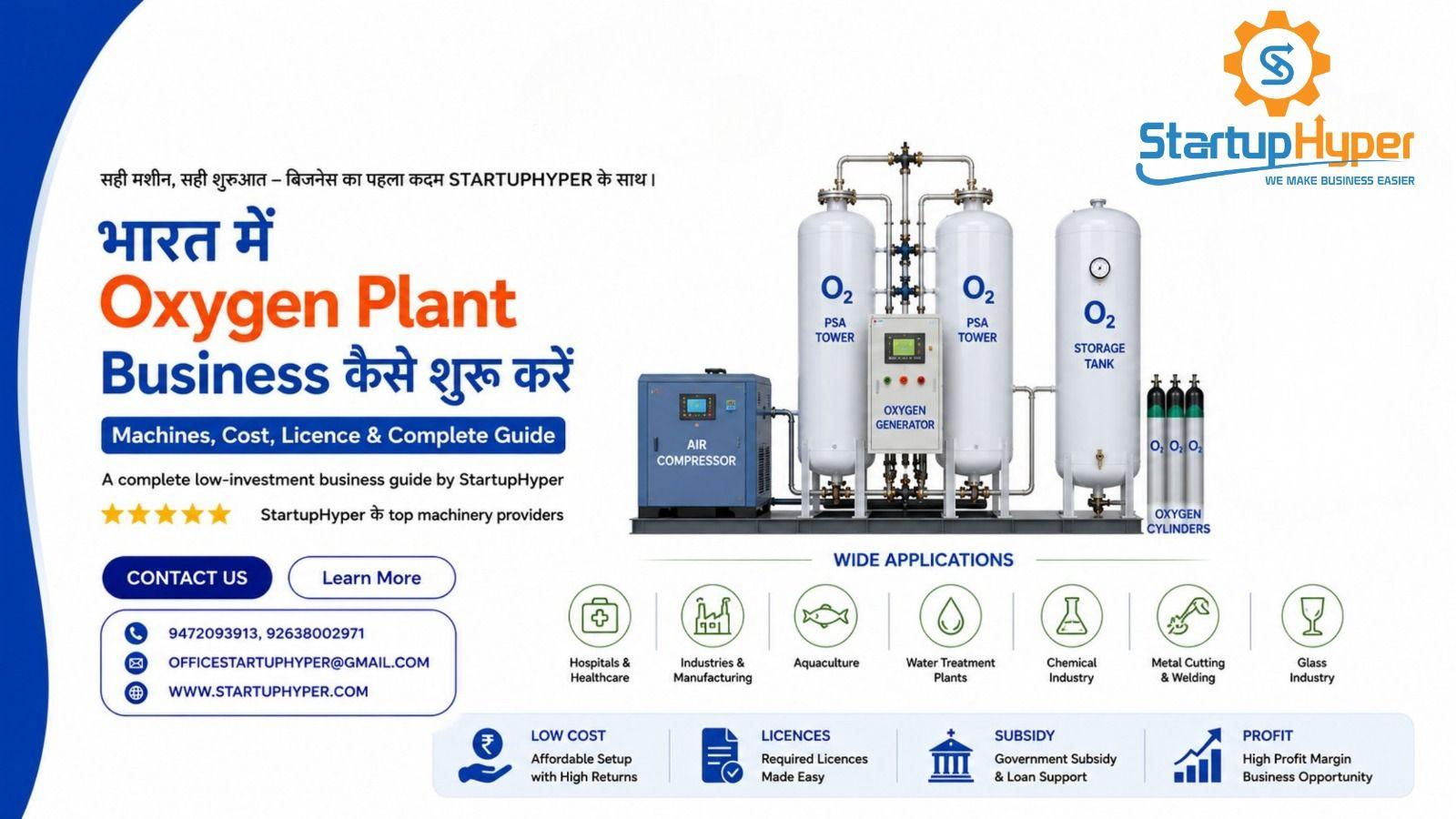
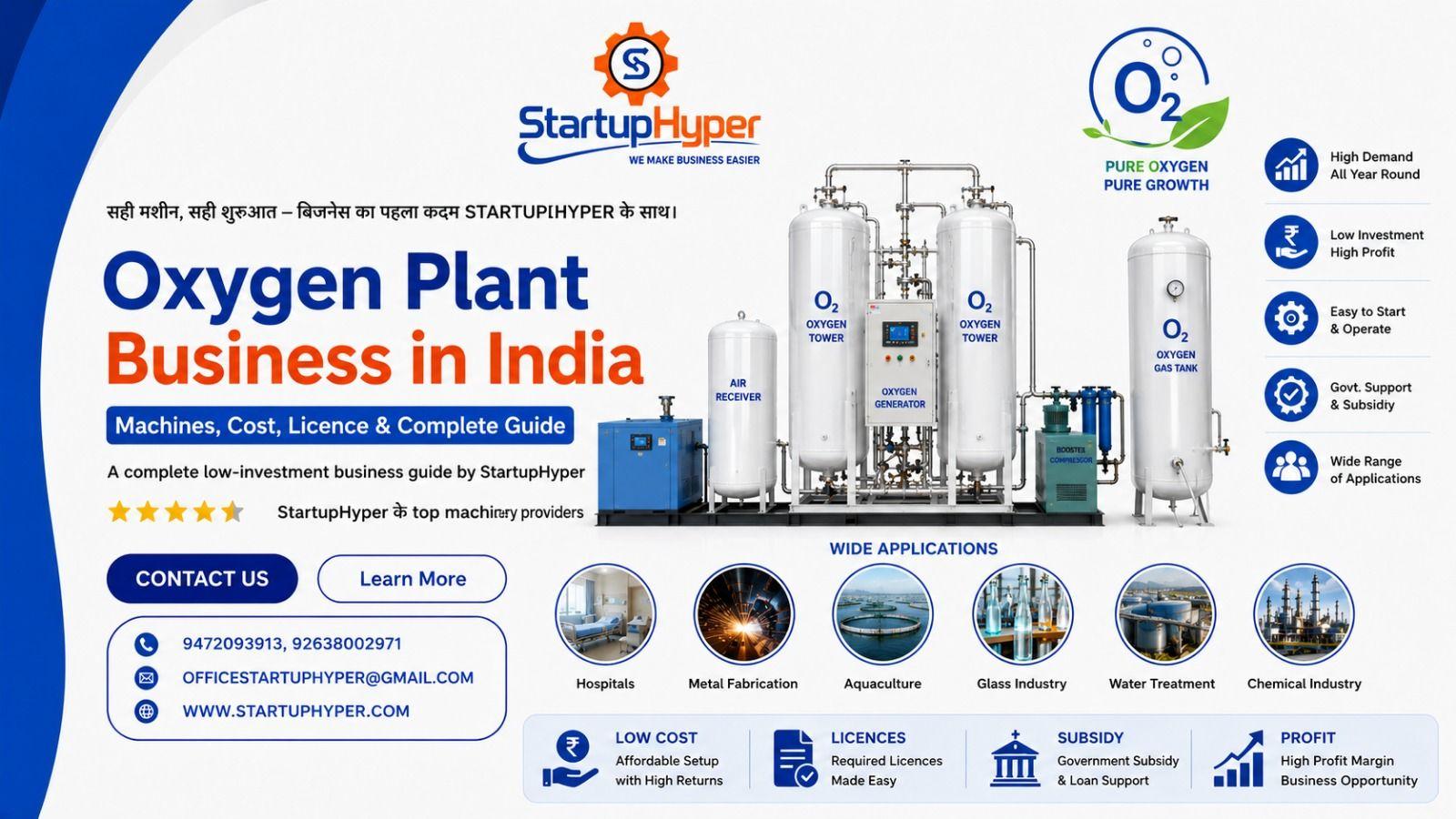
Read the full article to gain deeper insights and comprehensive information.

Jul 10, 2026
0
Compare oxygen plant vs nitrogen plant business in India. Understand PSA plant cost, machine list, demand, customers, licences, profit factors and which industrial gas business is right for you.
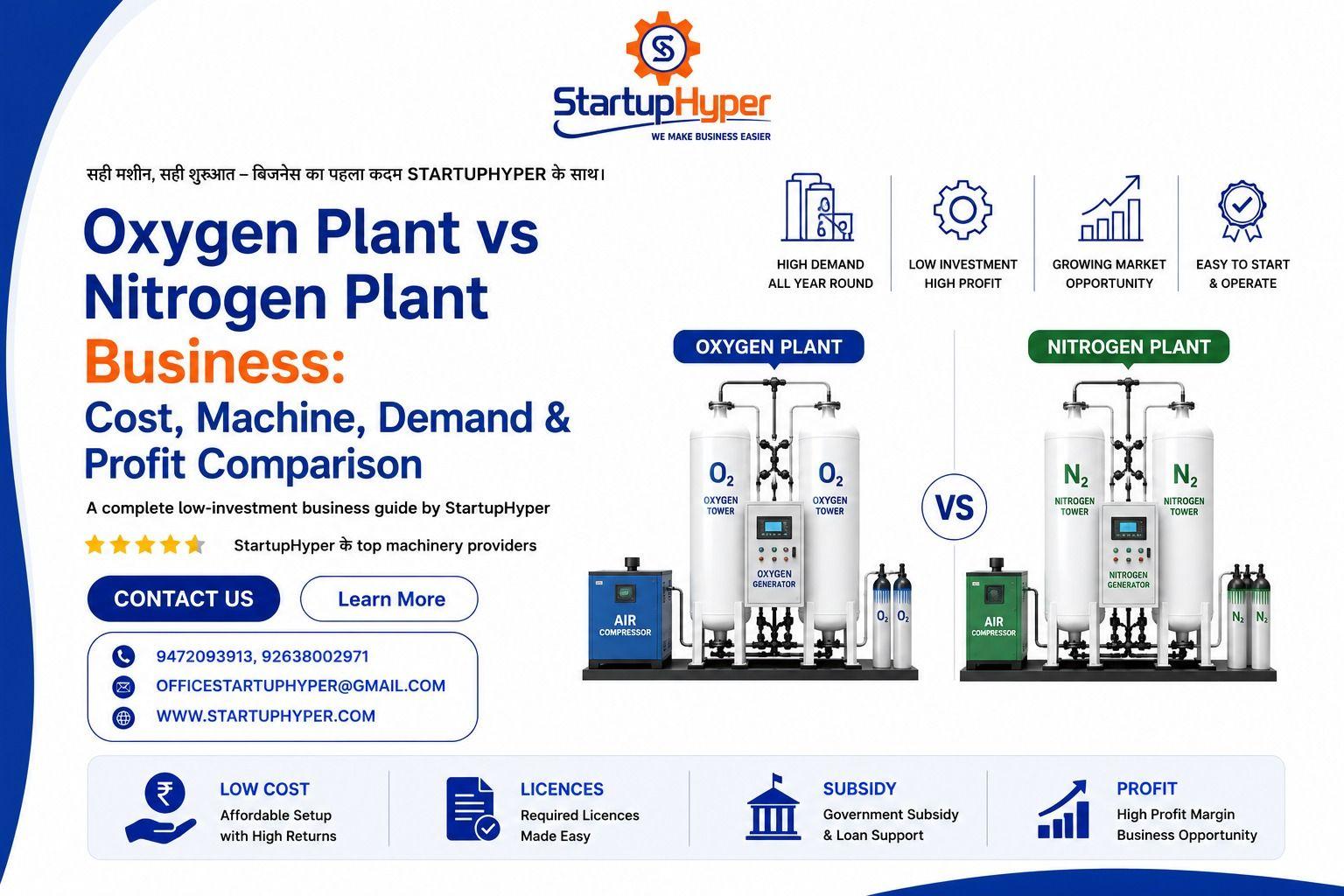
Oxygen plant business and nitrogen plant business both look similar at first.
Both use air as the main source. Both need an air compressor, air dryer, filters, receiver tanks, gas generator and control panel. Both can be installed as on-site gas generation systems or used for cylinder-based supply.
But the customer, gas quality, plant capacity, safety responsibility, licence requirement and profit model can be very different.
An oxygen plant can supply hospitals, nursing homes, welding shops, fabrication units, steel units and industrial customers. A nitrogen plant usually serves food-packaging units, snack manufacturers, pharmaceutical companies, chemical plants, electronics units, laser-cutting businesses and other factories that need inert gas.
“Which machine is cheaper?”
“Which gas has regular buyers near my location, and which setup can I operate safely and profitably?”
This detailed guide compares oxygen plant vs nitrogen plant business in India based on:
| Point | Oxygen Plant Business | Nitrogen Plant Business |
|---|---|---|
| Gas Produced | Oxygen | Nitrogen |
| Main Use | Medical care, welding, cutting, fabrication and industrial applications | Food packaging, pharma, chemicals, electronics, laser cutting and inerting |
| Common Technology | PSA Oxygen Plant | PSA Nitrogen Plant or Membrane Nitrogen Generator |
| Main Customers | Hospitals, clinics, welding shops, fabrication units and industrial distributors | Food factories, pharma companies, chemical units, packaging plants and industrial factories |
| Medical Use | Yes, if the plant and supply meet applicable medical requirements | No |
| Cylinder Supply Model | Common | Possible, but on-site supply is often more practical |
| On-Site Generation Model | Used by hospitals and industrial users | Very common for factories with continuous nitrogen demand |
| Main Quality Focus | Oxygen purity, pressure, reliability and safety | Nitrogen purity, flow rate, pressure and process compatibility |
| Main Risk | Medical-supply interruption, cylinder handling and safety compliance | Wrong purity selection, low plant utilisation and customer-process failure |
| Better For | Areas with hospitals, medical distributors, welding and fabrication demand | Areas with food, pharma, packaging, chemical and industrial clusters |
An oxygen plant business produces oxygen gas from air and supplies it to customers. Depending on the business model,
The two main categories are:
Medical oxygen is used in hospitals, nursing homes, clinics, ambulances and healthcare facilities.
A medical oxygen plant should never be treated like a normal small industrial setup. Supply interruption can directly affect patient care.
A nitrogen plant business produces nitrogen gas from air and supplies it to industrial customers. Nitrogen is an inert gas. It is used when a factory wants to reduce oxygen exposure, prevent oxidation, protect a product, purge a system or create a controlled atmosphere.
For many nitrogen customers, on-site generation is attractive because it reduces dependency on cylinder delivery and can give continuous gas supply.
A PSA oxygen plant separates oxygen from ambient air.
The basic working flow is:
Ambient Air → Air Compressor → Air Dryer → Filters → Air Receiver Tank → PSA Oxygen Generator → Oxygen Receiver Tank → Pipeline / Booster / Cylinder Filling
The air compressor takes air from the atmosphere and compresses it. The compressor is one of the most important parts of the plant because the PSA generator needs stable compressed air.
Compressed air contains moisture, dust and oil particles
Air dryers and filters remove these impurities before the air enters the PSA oxygen generator.
Poor air quality can damage the molecular sieve and reduce plant performance.
PSA means Pressure Swing Adsorption.
Inside the oxygen generator, molecular sieve beds absorb nitrogen from compressed air. Oxygen-rich gas passes through and is collected.
The molecular sieve beds work in cycles. While one bed absorbs nitrogen, another bed regenerates by releasing trapped gases.
The oxygen produced by the PSA system is stored in an oxygen receiver tank.
For medical PSA systems, oxygen is commonly produced at around 93% purity, subject to the plant design, intended use and applicable standards.
A nitrogen plant also uses air, but it separates oxygen instead of nitrogen.
The basic flow is:
Ambient Air → Air Compressor → Air Dryer → Filters → Air Receiver Tank → PSA Nitrogen Generator / Membrane Generator → Nitrogen Receiver Tank → Pipeline / Production Machine / Booster
The air compressor supplies compressed air.
The dryer and filters remove moisture, oil and dust. Nitrogen generators need clean air for stable performance and long equipment life.
In a PSA nitrogen plant, carbon molecular sieve material is commonly used to separate oxygen from compressed air.
Oxygen is adsorbed more quickly, while nitrogen-rich gas passes through.
In a membrane nitrogen generator, compressed air passes through membrane fibres. Oxygen, water vapour and carbon dioxide permeate faster than nitrogen, leaving nitrogen-rich gas.
The nitrogen is stored in a nitrogen receiver tank and supplied through pipeline directly to the customer’s machine or process.
For example, a food-packaging factory may use nitrogen for pouch flushing. A laser-cutting unit may use nitrogen at high pressure. A chemical plant may use nitrogen for blanketing or purging.
| Point | PSA Oxygen Plant | PSA Nitrogen Plant |
|---|---|---|
| Separation Objective | Removes nitrogen from compressed air | Removes oxygen from compressed air |
| Main Adsorbent | Zeolite Molecular Sieve | Carbon Molecular Sieve |
| Output Gas | Oxygen-rich gas | Nitrogen-rich gas |
| Common Purity Range | Depends on the application; medical PSA oxygen is commonly around 93% purity | Depends heavily on the application; higher purity generally means lower output flow |
| Common Use | Hospitals, medical gas pipelines, welding, cutting and industrial oxygen supply | Food packaging, pharma, chemicals, laser cutting and industrial inerting |
| Backup Importance | Extremely high for medical supply and hospital operations | High for factories with continuous production requirements |
| Main Customer Concern | Reliability, oxygen purity, pressure and emergency supply backup | Nitrogen purity, flow rate, pressure and uninterrupted production |
The important point is that nitrogen purity and flow are closely connected.
If a customer needs higher nitrogen purity, the plant may produce lower flow at the same size. Therefore, nitrogen plant selection should always start with the customer’s exact purity and flow requirement.
A complete oxygen plant setup may include:
| Machine / Equipment | Main Work |
|---|---|
| Air Compressor | Compresses atmospheric air for the plant. |
| Air Dryer | Removes moisture from compressed air. |
| Pre-Filters and Fine Filters | Remove dust, oil traces and fine particles from the air. |
| Air Receiver Tank | Stores compressed air and maintains stable air supply. |
| PSA Oxygen Generator | Produces oxygen-rich gas from compressed air. |
| Molecular Sieve Beds | Separate nitrogen from air using zeolite molecular sieve material. |
| Oxygen Receiver Tank | Stores the produced oxygen before supply or filling. |
| Oxygen Purity Analyzer | Checks and monitors oxygen concentration or purity. |
| Flow Meter | Measures the oxygen flow rate. |
| Pressure Gauges | Monitor air and oxygen pressure across the system. |
| Oxygen Booster Compressor | Increases oxygen pressure for cylinder filling, where required. |
| Cylinder Filling Manifold | Fills multiple oxygen cylinders at the same time. |
| Oxygen Pipeline System | Delivers oxygen to hospital beds, medical pipelines or industrial points. |
| Electrical Control Panel | Controls plant operation, alarms and automation. |
| Backup Cylinder System | Supports oxygen supply during maintenance, breakdowns or emergencies. |
A complete nitrogen plant setup may include:
| Machine / Equipment | Main Work |
|---|---|
| Air Compressor | Supplies compressed air to the nitrogen generation system. |
| Air Dryer | Removes moisture from compressed air. |
| Air Filters | Remove oil, dust and other contaminants from the air. |
| Air Receiver Tank | Stores compressed air and helps maintain stable pressure. |
| PSA Nitrogen Generator / Membrane Nitrogen Generator | Produces nitrogen gas from compressed air. |
| Carbon Molecular Sieve (for PSA Systems) | Separates oxygen from air to produce nitrogen-rich gas. |
| Nitrogen Receiver Tank | Stores generated nitrogen before use or supply. |
| Nitrogen Purity Analyzer | Checks and monitors nitrogen purity. |
| Flow Meter | Measures nitrogen flow rate. |
| Pressure Gauges | Monitor gas pressure across the system. |
| Nitrogen Booster Compressor | Increases nitrogen pressure for specific applications or cylinder filling. |
| Nitrogen Pipeline | Supplies nitrogen gas directly to factory machines and process points. |
| Electrical Control Panel | Controls, automates and protects plant operation. |
| Cylinder Filling Setup (if applicable) | Fills nitrogen cylinders for transport or external supply. |
The investment depends on plant capacity, purity, pressure, technology, automation, installation and whether the plant includes cylinder filling.
| Setup | Approximate Investment Range |
|---|---|
| Small PSA Oxygen Generator Setup | ₹15 lakh–₹35 lakh |
| 10–20 Nm³/hr PSA Oxygen Plant | ₹25 lakh–₹60 lakh |
| 20–50 Nm³/hr PSA Oxygen Plant | ₹50 lakh–₹1.2 crore |
| Oxygen Plant with Booster and Cylinder Filling Setup | ₹75 lakh–₹2 crore+ |
| Small PSA Nitrogen Generator Setup | ₹8 lakh–₹25 lakh |
| Medium PSA Nitrogen Plant | ₹20 lakh–₹60 lakh |
| High-Purity / High-Pressure Nitrogen Plant | ₹40 lakh–₹1 crore+ |
| Large Cryogenic Oxygen or Nitrogen Plant | Several crore rupees and above |
Note: These are indicative planning ranges. Final cost changes according to compressor capacity, purity requirement, flow rate, receiver size, booster, pipeline, electrical work, safety system, civil work, installation, transport, taxes, licences and working capital.
A nitrogen plant can be lower-cost when:
Nitrogen plant cost can rise sharply when:
| Setup Type | Oxygen Plant | Nitrogen Plant |
|---|---|---|
| Small On-Site Generator | Around 500–1,000 sq. ft. | Can be compact; depends on generator capacity and receiver tank size. |
| Plant with Storage and Pipeline | Around 1,000–2,000 sq. ft. or more | Around 500–1,500 sq. ft. or more |
| Cylinder Filling Setup | Around 1,500–3,000 sq. ft. or more | Similar or higher, depending on operating pressure and cylinder storage requirements. |
| Large Commercial Plant | 3,000 sq. ft. and above | Depends on plant capacity, pipeline layout and storage plan. |
For oxygen cylinder filling, empty and filled cylinders should be managed and stored safely according to applicable requirements.
Both oxygen and nitrogen plants depend heavily on the air compressor.
The compressor usually consumes a major share of total electricity.
Power requirement depends on:
Before finalising the site, ask the supplier for:
A plant with low electricity availability or frequent voltage fluctuation can face downtime and maintenance problems.
Oxygen demand can come from medical and industrial sectors.
Medical oxygen can offer stable demand in areas with hospitals and healthcare infrastructure. However, medical supply requires stronger quality assurance, emergency backup and compliance planning.
Industrial oxygen can work well in cities with fabrication markets, welding clusters, steel processing and engineering workshops.
Nitrogen demand is mainly driven by industrial processes.
Nitrogen is used in snack, chips, namkeen, coffee, dry-food and packaged-food businesses for gas flushing and modified atmosphere packaging.
It helps reduce oxygen inside the pouch and can support product freshness and shelf-life management.
Nitrogen may be used in pharmaceutical manufacturing, packaging, blanketing and controlled processing environments.
Chemical plants can use nitrogen for purging, blanketing, inerting and process safety. Electronics and Electrical Industry
Nitrogen may be used in electronics manufacturing and specialised production processes where oxidation control is important.
Laser-cutting machines may use high-pressure nitrogen as an assist gas for certain materials and finishing requirements.
Nitrogen can be used in tyre filling and some manufacturing processes.
| Market Situation | Better Option |
|---|---|
| City with many hospitals and nursing homes | Oxygen Plant |
| Area with welding, fabrication and metal markets | Industrial Oxygen Plant |
| Food-processing and snack manufacturing cluster | Nitrogen Plant |
| Pharma and chemical industrial area | Nitrogen Plant |
| Industrial estate with continuous factory operations | Nitrogen Plant |
| Hospital needing pipeline oxygen generation | PSA Oxygen Plant |
| Factory using nitrogen every day | On-site PSA Nitrogen Plant |
| Strong cylinder-distribution network | Oxygen or nitrogen cylinder business, subject to applicable approvals and safety requirements |
The best way to decide is to survey your local market before buying a machine. A nitrogen plant can be highly profitable with one large factory customer that consumes gas continuously. An oxygen plant can be strong when there is a reliable hospital network or industrial oxygen demand nearby.
Both oxygen and nitrogen plants can require approvals because they involve compressed gas, pressure systems, electrical installations, storage and, in some cases, cylinder filling.
Medical oxygen has additional quality and healthcare-related responsibilities.
Depending on the model, medical oxygen projects may require attention to:
Before investing in medical oxygen, confirm requirements with the State Drug Controller, PESO, local fire authority, State Pollution Control Board and qualified compliance professionals.
No industrial gas business has a fixed guaranteed profit margin.
Profit depends on how much of your plant capacity is actually used.
A plant running at 30% capacity can struggle even if the gas selling price looks good. A smaller plant with stable customers and regular billing can perform better.
| Profit Factor | Oxygen Plant | Nitrogen Plant |
|---|---|---|
| Plant Utilisation | Very important | Very important |
| Electricity Cost | High impact on operating cost | High impact on operating cost |
| Compressor Efficiency | Important for reducing power consumption | Important for reducing power consumption |
| Cylinder Logistics | Often important, especially for distribution businesses | Important when the cylinder supply model is used |
| Customer Contracts | Critical for stable demand and predictable revenue | Critical for stable demand and predictable revenue |
| Gas Purity Requirement | Important, particularly for medical and industrial applications | Extremely important because different processes require different purity levels |
| Machine Downtime | High risk, especially for hospitals and continuous-use customers | High risk for factories with continuous production |
| On-Site Supply Advantage | Strong for hospitals and industrial users with regular oxygen demand | Very strong for industrial factories with daily nitrogen consumption |
| Credit Period | Can affect cash flow and working-capital planning | Can affect cash flow and working-capital planning |
Oxygen plant profit can come from: • Medical oxygen supply contracts • Hospital pipeline supply • Oxygen cylinder sales • Welding and fabrication supply • Industrial customer contracts • On-site oxygen generation projects
• You have regular buyers • Cylinder delivery distance is short • Plant capacity is used properly • Electricity cost is controlled • Maintenance is planned • Leakage and wastage are low • Payment collection is strong
Nitrogen plant profit can come from:
Nitrogen plants can have a strong business model when installed at a customer site under a long-term supply or equipment arrangement.
This can reduce transport and cylinder-handling cost compared with a cylinder-only model.
For many first-time entrepreneurs, a nitrogen generator project linked to a confirmed industrial customer can be easier to plan than a medical oxygen cylinder business.
But if you have strong hospital demand and proper technical support, PSA oxygen generation can also be a strong long-term business.
List potential buyers within your city and nearby industrial areas.
Do not ask only, “Do you need oxygen or nitrogen?”
Choose capacity based on confirmed customer demand and peak consumption.
Do not install a large plant only because the supplier says it will be more profitable.
Compare complete quotations, not only generator price.
Confirm industrial power, ventilation, space, access road, safety layout and local approvals before paying advance for machinery.
Hospitals and continuous-production factories cannot easily stop their gas use.
Plan:
Never buy a large oxygen or nitrogen plant only because the sector looks growing. First confirm demand.
A nitrogen plant may produce gas, but if purity does not match the customer’s process, the customer may reject the supply.
The gas generator depends on clean and dry compressed air. Poor compressor, dryer or filter quality can reduce output, damage separation media and increase maintenance cost
Air compressors and boosters consume significant electricity. Include power cost in your project calculation.
Cylinder filling, transport, testing, storage, loading, unloading and return cycles can create major operational costs.
Medical oxygen requires stronger quality, safety and supply-continuity planning.
A low machine price may look attractive, but poor after-sales support, unavailable spares and frequent breakdowns can hurt the business.
You may need money for electricity, labour, maintenance, transport, cylinders, customer credit and emergency repairs before regular payments start coming in.

StartupHyper can help you understand the machinery and planning difference between oxygen and nitrogen plant setups.
For medical oxygen, compressed-gas storage and cylinder-filling projects, final technical design and compliance must always be completed with qualified engineers and the concerned authorities.
It depends on your local customer base. Oxygen plant business can be better near hospitals, welding and fabrication markets. Nitrogen plant business can be better near food-processing, pharma, chemical, packaging and industrial clusters.
Oxygen plant business can be profitable when you have regular customers, correct plant capacity, reliable machinery, controlled electricity and logistics cost, proper maintenance and strong compliance planning.
Nitrogen plant business can be profitable when you have regular industrial customers and good plant utilisation. On-site nitrogen generation can work well for factories that need nitrogen continuously.
A small PSA oxygen generator setup may start around ₹15 lakh–₹35 lakh. A larger commercial oxygen plant with booster compressor and cylinder filling can require ₹75 lakh or more depending on capacity and equipment.
A small PSA nitrogen generator setup may start around ₹8 lakh–₹25 lakh. The cost can increase significantly for high purity, high pressure, larger flow capacity or cylinder-filling setups.
No. Oxygen and nitrogen plants both use air separation, but the generator design, separation media, process settings and output gas are different.
Yes. Depending on the setup, approvals may be required for business operations, factory activity, fire safety, electrical safety, compressed gas storage and cylinder filling. Medical oxygen can require additional compliance.
A PSA oxygen plant uses compressed air and molecular sieve technology to separate nitrogen and produce oxygen-rich gas.
A PSA nitrogen plant uses compressed air and adsorption technology to remove oxygen and produce nitrogen-rich gas.
Nitrogen can be better for industrial business when you have food packaging, pharma, chemical, electronics, laser cutting or continuous manufacturing customers. Oxygen can be better where welding, fabrication, hospitals and medical distribution demand is strong.
Choose an oxygen plant business in India when you have reliable hospital, medical distributor, welding or fabrication customers and can manage safety, quality and backup supply.
Choose a nitrogen plant business in India when you have food, pharma, chemical, packaging or industrial customers that need nitrogen regularly, especially through an on-site supply model. The best industrial gas business is not decided by the lowest machine price.
Contact StartupHyper to discuss PSA oxygen plant, PSA nitrogen plant, machine capacity and a practical industrial gas business setup based on your target market
📞Call / WhatsApp: 9472093913
📧Email: info@startuphyper.com
🌐 Website: www.startuphyper.com | www.machinehai.com
🏢 Branches: Patna | Gaya | Katihar | Saharsa
Stay updated with the latest tips, trends, and best practices in factory setup and machinery procurement—subscribe to the StartupHyper newsletter!
No spam, we promise. Your inbox is safe with us—only valuable insights.