Read the full article to gain deeper insights and comprehensive information.

Aug 12, 2026
0
Learn how to start a Material Recovery Facility in India, including investment, machinery, waste segregation process, recyclable materials, revenue potential and complete setup requirements.
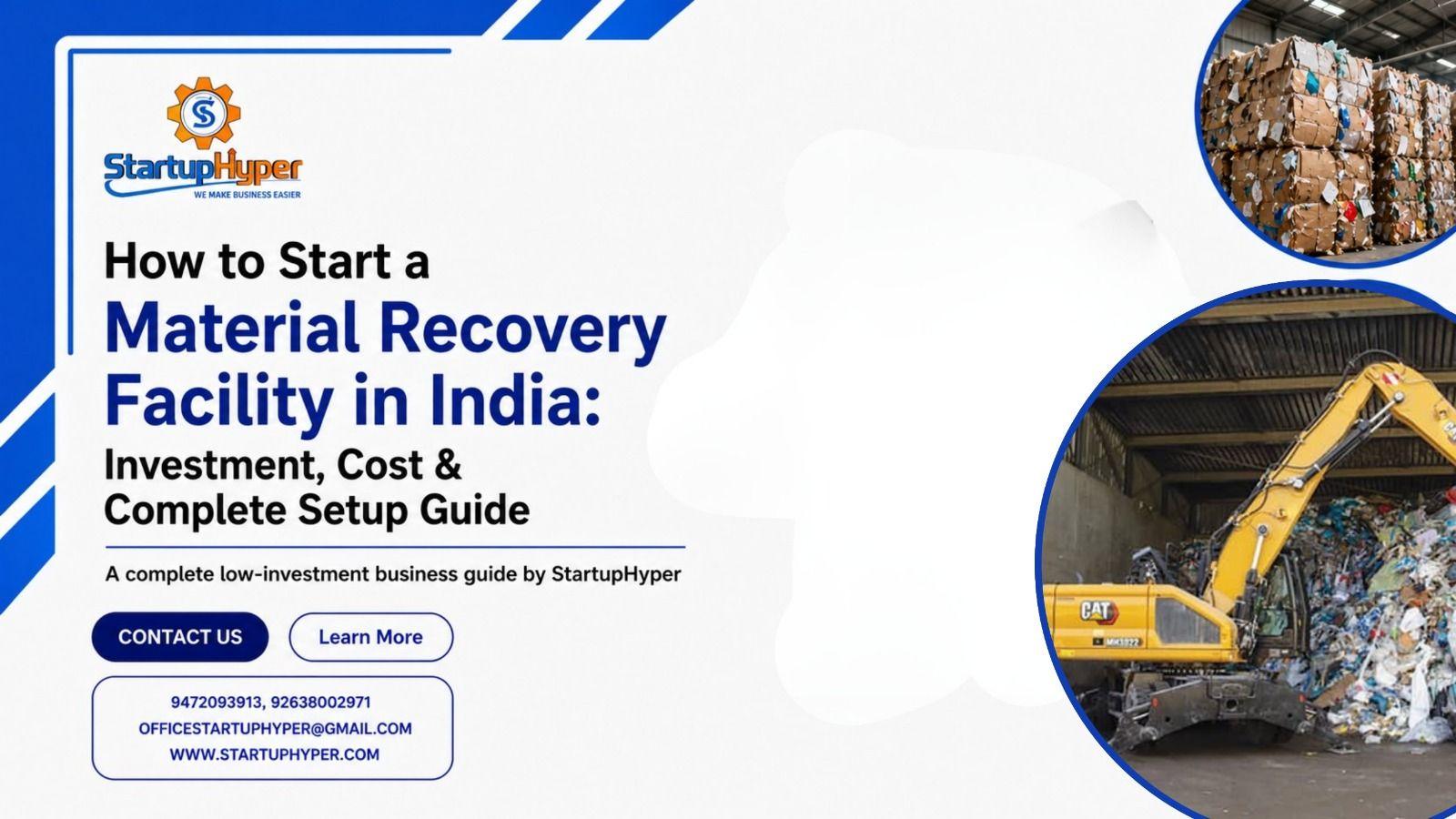
A Material Recovery Facility is a waste-processing facility where recyclable and recoverable materials are separated, sorted, stored and prepared for further recycling.
A Material Recovery Facility generally handles dry or non-biodegradable waste such as plastic, paper, cardboard, metal, glass and packaging materials. After segregation, these materials are separated according to their type and quality and supplied to recyclers, aggregators or other suitable buyers.
The design of a Material Recovery Facility depends on the quantity and type of waste being processed. Smaller facilities may use more manual sorting, while larger facilities can use conveyors, screening systems, magnetic separators, balers and other mechanical equipment.
A Material Recovery Facility provides an organized system for recovering useful materials from dry waste instead of sending all waste directly for disposal.
A properly planned facility can help:
• Separate recyclable materials from mixed dry waste
• Increase material recovery
• Reduce the amount of waste sent for disposal
• Prepare recyclable materials for bulk buyers
• Improve waste-handling efficiency
• Support recycling and resource recovery
The recovered materials can then move into the recycling chain, where they are processed into new products or raw materials.
The materials recovered depend on the type of waste received by the facility.
Common materials include:
• Plastic
• Paper
• Cardboard
• Glass
• Metals
• PET bottles
• Packaging materials
• Other recyclable dry waste
Different materials can be further separated into categories based on their composition, quality and market requirements.
The segregated materials are generally stored separately until sufficient quantities are accumulated for transportation to recyclers or other buyers.
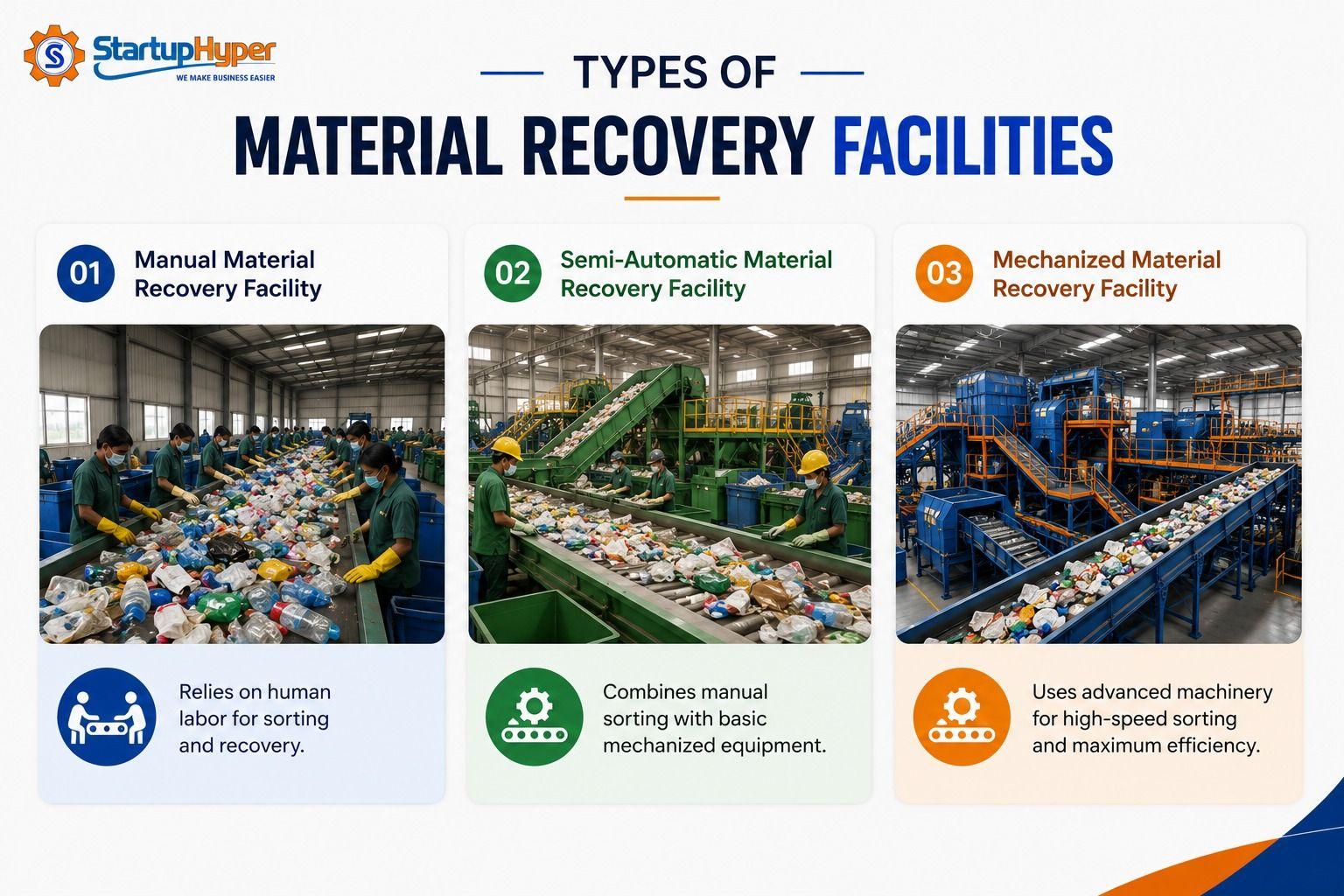
Material Recovery Facilities can differ in their level of mechanization.
In a manual facility, workers perform most of the sorting and segregation.
This type of setup can be suitable for smaller waste volumes where the investment in automated equipment may not be necessary.
A semi-automatic facility combines manual sorting with mechanical equipment such as conveyors and screening systems.
This setup can increase handling capacity while retaining manual sorting for materials that require visual identification.
A mechanized facility uses more equipment to automate different stages of material separation and handling.
Depending on the waste stream, it may include:
• Conveyors
• Screening systems
• Magnetic separators
• Air separation systems
• Sorting systems
• Baling machines
The machinery configuration should be based on the type and quantity of waste entering the facility.
There is no single fixed Material Recovery Facility Cost because investment varies according to the capacity, automation level and machinery configuration.
Major cost components can include:
• Conveyors
• Sorting equipment
• Screening equipment
• Material separation systems
• Baling or compaction equipment
• Storage and handling equipment
• Electrical and control systems
• Material-handling equipment
• Initial working capital
A smaller manual or semi-automatic facility will generally require less investment than a large mechanized Material Recovery Facility.
Therefore, the actual project cost should be calculated according to the processing capacity, incoming waste characteristics, recovery targets and selected machinery.
The machinery required depends on the type and quantity of waste being processed.
Common equipment can include:
Conveyors move waste from one stage of the facility to another and reduce manual material handling.
Screening equipment separates materials according to size and helps organize the waste stream.
A magnetic separator is used to recover ferrous metals from the waste stream.
Air-based separation can help separate lighter materials from heavier waste fractions, depending on the plant configuration.
Manual sorting stations allow workers to identify and separate materials that automated equipment may not reliably classify.
A baling machine compresses selected recyclable materials into compact bales, making them easier to store, handle and transport.
Recovered materials require separate storage areas so that different categories can be accumulated and dispatched efficiently.
The final Material Recovery Facility Machinery configuration should be designed around the actual waste stream rather than installing equipment that is not required for the project.
The Material Recovery Facility Waste Segregation Process generally consists of receiving, sorting, recovering, storing and dispatching materials.
Dry or recyclable waste is brought to the facility and unloaded in the designated receiving area.
Large unwanted materials and visible contaminants are removed before further sorting.
Screening equipment separates waste according to size where required.
Different separation systems can be used to recover materials such as metals, plastics and other recyclable fractions.
Workers manually identify and separate materials that require visual or category-based sorting.
Selected recyclable materials can be compressed or baled to improve storage and transportation efficiency.
Recovered materials are stored separately according to their category.
The recovered materials are supplied to recyclers, aggregators or other downstream buyers.
Before starting a Material Recovery Facility Setup, the first step should be understanding the waste stream that the facility will process.
Determine whether the facility will receive source-segregated dry waste, mixed waste or a specific recyclable material stream.
Estimate the quantity of waste the facility needs to handle per day.
Identify which materials you intend to recover and the expected quantities.
Decide whether manual, semi-automatic or mechanized sorting is suitable for the planned capacity.
Identify potential recyclers, aggregators and other buyers for recovered materials.
Receiving, sorting, storage and dispatch areas should be arranged logically to reduce unnecessary movement and handling.
A Material Recovery Facility Project Report provides a structured overview of the proposed project.
It can include:
• Project overview
• Waste stream details
• Processing capacity
• Material recovery plan
• Machinery requirement
• Plant layout
• Estimated investment
• Operating expenses
• Revenue sources
• Buyer and marketing strategy
• Financial projections
A detailed project report helps entrepreneurs evaluate the technical and commercial feasibility of the proposed facility.
The main commercial opportunity comes from recovering materials that have resale value.
Recovered plastic, paper, cardboard, metal, glass and other recyclable materials can be sold to suitable downstream buyers.
Depending on the business model, a Material Recovery Facility may also operate through contracts for waste collection, segregation or processing.
Proper segregation, grading and baling can make recovered materials easier to store, transport and sell in bulk.
However, profitability is not fixed. It depends on factors such as:
• Quantity of incoming waste
• Recovery rate
• Material selling prices
• Labour cost
• Transportation cost
• Machinery and maintenance costs
• Contract terms
• Operating efficiency
Therefore, profit should be calculated based on the specific project rather than using a standard figure.
A Material Recovery Facility Business can be considered by:
• Waste-management entrepreneurs
• Recycling businesses
• Scrap aggregators
• Waste-management companies
• Municipal contractors
• Social enterprises
• Entrepreneurs entering the recycling sector
The business model can vary depending on whether the facility focuses on material trading, waste-processing contracts, recycling supply chains or a combination of these activities.
Different waste streams require different sorting and separation systems. Machinery should be selected after understanding the actual material composition.
Recovered materials should be segregated according to the specifications and quality requirements of downstream buyers.
Automation should match the processing volume. Unnecessary equipment can increase investment and maintenance costs.
Recovered materials need adequate storage space before they are dispatched.
Receiving waste is only the beginning. Efficient sorting, recovery, storage and sale of materials are equally important to the business model.

Setting up a Material Recovery Facility requires the right combination of machinery, capacity planning and process design.
At StartupHyper, we help entrepreneurs and businesses evaluate machinery and setup requirements according to their project goals.
Our support includes:
• Material Recovery Facility Machinery selection
• Capacity planning
• Plant setup guidance
• Machinery comparison
• Project planning
• Technical guidance
• Connecting with suitable machinery manufacturers
• Business consultation
Whether you are planning a small sorting facility or a larger mechanized Material Recovery Facility, StartupHyper can help you understand the machinery and setup requirements before making an investment.
A Material Recovery Facility is a waste-processing facility where recyclable materials such as plastic, paper, cardboard, metal and glass are separated and prepared for recycling or further processing.
Its main purpose is to recover useful recyclable materials from dry waste and direct them toward the recycling supply chain.
Depending on the plant design, machinery may include conveyors, screening systems, magnetic separators, air separation systems, sorting stations and baling machines.
The cost depends on processing capacity, automation level, machinery configuration and the type of waste being processed. A project-specific estimate is more accurate than a fixed price.
Common materials include plastic, paper, cardboard, metal, glass, PET bottles and other recyclable dry waste.
Not exactly. A Material Recovery Facility primarily sorts and recovers materials. The recovered materials are generally sent to downstream recycling facilities for further processing.
It can be commercially viable, but profitability depends on the quantity and quality of incoming waste, recovery efficiency, material prices, operating costs and the business model.
Select machinery based on your waste type, processing capacity, recovery targets, automation requirements, maintenance needs and buyer specifications.
A Material Recovery Facility provides a structured way to recover recyclable materials from dry waste and supply them to the recycling industry. The facility can range from a manual sorting setup to a highly mechanized plant, depending on the quantity and characteristics of the waste being processed.
For entrepreneurs, the key is to plan the project around the actual waste stream, required processing capacity, recovery targets and market for recovered materials.
Choosing the right Material Recovery Facility Machinery is equally important. A properly planned setup can improve sorting efficiency, material recovery and handling while creating a business opportunity within the waste-management and recycling sector.
If you are planning to set up a Material Recovery Facility in India, StartupHyper can help you evaluate the machinery, capacity and overall plant setup according to your business requirements.
📞Call / WhatsApp: 9472093913
📧Email: info@startuphyper.com
🌐 Website: www.startuphyper.com | www.machinehai.com
🏢 Branches: Patna | Gaya | Katihar | Saharsa
Stay updated with the latest tips, trends, and best practices in factory setup and machinery procurement—subscribe to the StartupHyper newsletter!
No spam, we promise. Your inbox is safe with us—only valuable insights.