Read the full article to gain deeper insights and comprehensive information.

Aug 08, 2026
0
Learn how to start a Bio Fertilizer Manufacturing Plant in India. Explore bio fertilizer plant cost, manufacturing process, machinery, raw materials, project report, profit potential, and complete plant setup.

What is a Bio Fertilizer Plant?
Why Start a Bio Fertilizer Manufacturing Plant?
Bio Fertilizer Market in India
Types of Bio Fertilizers
Bio Fertilizer Plant Cost in India
Raw Materials Required
Bio Fertilizer Manufacturing Process
Bio Fertilizer Plant Setup
Bio Fertilizer Plant Project Report
How to Choose the Right Bio Fertilizer Plant Manufacturer
Profit Potential
How StartupHyper Can Help
FAQs
Conclusion
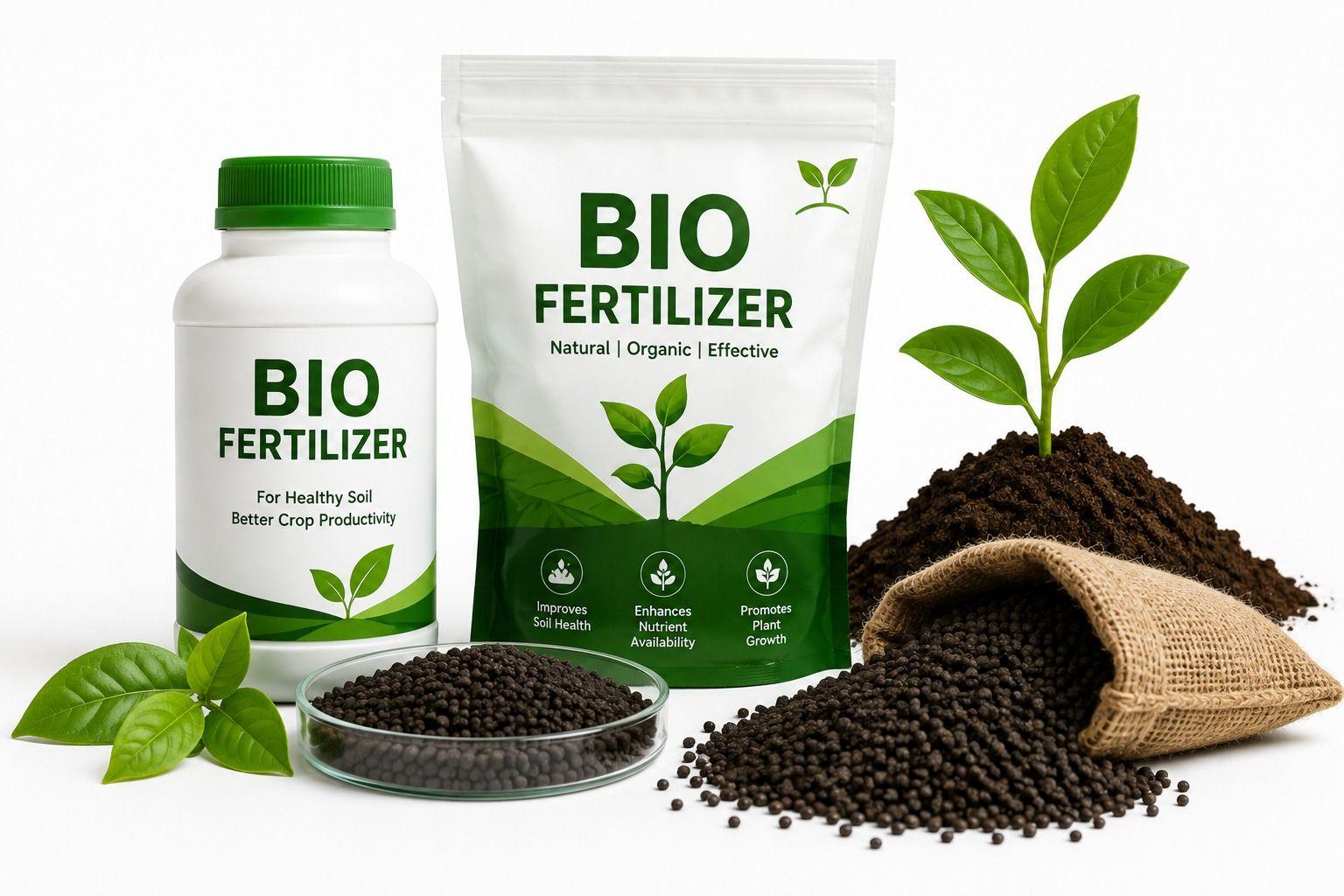
A Bio Fertilizer Plant is a manufacturing facility where beneficial microorganisms are cultivated and processed into bio fertilizers. These microorganisms help improve soil fertility, increase nutrient availability, and promote healthy plant growth naturally.
Unlike chemical fertilizers that directly supply nutrients to crops, bio fertilizers contain living microorganisms that enhance the soil's ability to provide essential nutrients such as nitrogen and phosphorus to plants.
A typical Bio Fertilizer Manufacturing Plant produces different types of bio fertilizers in liquid or carrier-based forms, which are widely used in agriculture, horticulture, organic farming, nurseries, and plantation crops.
With the growing demand for sustainable farming practices, bio fertilizer manufacturing has become an emerging opportunity in India's agricultural sector.
The demand for bio fertilizers has increased steadily over the last few years due to the growing focus on sustainable agriculture and soil health.
Several factors are driving the growth of the Bio Fertilizer Manufacturing Business:
• Increasing adoption of organic farming
• Rising awareness about soil health
• Growing demand for residue-free agricultural produce
• Expansion of horticulture and plantation farming
• Reduced dependence on chemical fertilizers
• Increasing use of microbial fertilizers by progressive farmers
As awareness among farmers continues to improve, the demand for quality bio fertilizers is expected to grow across different regions of India.
India is one of the world's largest agricultural economies, creating consistent demand for products that improve crop productivity while maintaining soil fertility.
Bio fertilizers are widely used in crops such as:
• Rice
• Wheat
• Sugarcane
• Cotton
• Pulses
• Oilseeds
• Fruits
• Vegetables
• Plantation Crops
The market is supported by increasing awareness of sustainable farming practices and the growing use of bio-inputs by commercial farmers.
Apart from agriculture, bio fertilizers are also used by:
• Organic farms
• Nurseries
• Greenhouses
• Landscaping companies
• Horticulture businesses
This expanding customer base makes the Bio Fertilizer Plant a promising manufacturing opportunity.
Different microorganisms are used to manufacture different types of bio fertilizers. Each serves a specific purpose in improving soil fertility and plant nutrition.
Rhizobium is a nitrogen-fixing bacterium primarily used for leguminous crops such as soybean, chickpea, lentil, and pea.
It forms nodules on plant roots and helps convert atmospheric nitrogen into a form that plants can absorb.
Azotobacter is a free-living nitrogen-fixing bacterium suitable for non-leguminous crops.
It is commonly used in:
• Wheat
• Maize
• Cotton
• Sugarcane
• Vegetables
Besides nitrogen fixation, it also promotes root development and plant growth.
Azospirillum is widely used for cereal crops because it enhances root growth and improves nutrient uptake.
Common applications include:
• Rice
• Wheat
• Maize
• Sorghum
• Millets
Many soils contain phosphorus that plants cannot absorb directly.
PSB converts insoluble phosphorus into plant-available forms, improving phosphorus utilization and crop growth.
It is suitable for most agricultural and horticultural crops.
Potash Mobilizing Bacteria help release potassium present in the soil, making it available to plants.
These bio fertilizers are commonly used for:
• Fruits
• Vegetables
• Cereals
• Cash Crops
Mycorrhiza is a beneficial fungus that forms a symbiotic relationship with plant roots.
It improves:
• Water absorption
• Nutrient uptake
• Root development
• Plant tolerance to environmental stress
Mycorrhiza is widely used in horticulture, forestry, nurseries, and fruit plantations.
The investment required to establish a Bio Fertilizer Plant depends on several factors, including production capacity, automation level, machinery, and packaging requirements
| Plant Type | Estimated Investment |
|---|---|
| Small-Scale Plant | ₹10 lakh – ₹25 lakh |
| Medium-Scale Plant | ₹25 lakh – ₹75 lakh |
| Large Manufacturing Plant | ₹75 lakh – ₹2 crore+ |
The total project cost generally includes:
• Bio fertilizer manufacturing machines
• Laboratory equipment
• Fermentation units
• Mixing equipment
• Packaging machines
• Quality testing equipment
• Initial raw materials
• Working capital
The exact investment varies based on the production capacity and the range of bio fertilizers you plan to manufacture.
The quality of a bio fertilizer largely depends on the quality of raw materials and microbial cultures used during production. Using certified cultures and maintaining proper hygiene throughout the manufacturing process is essential for producing an effective and stable product.
The major raw materials required in a Bio Fertilizer Manufacturing Plant include:
• Mother Culture (Beneficial Microorganisms)
• Carrier Material (Lignite, Peat, Charcoal Powder, Talc, etc.)
• Nutrient Media
• Sterile Water
• Additives (if required)
• Food-Grade Packaging Material
• Labels and Corrugated Boxes
Among these, the Mother Culture is the most critical raw material, as it determines the quality and effectiveness of the final bio fertilizer.
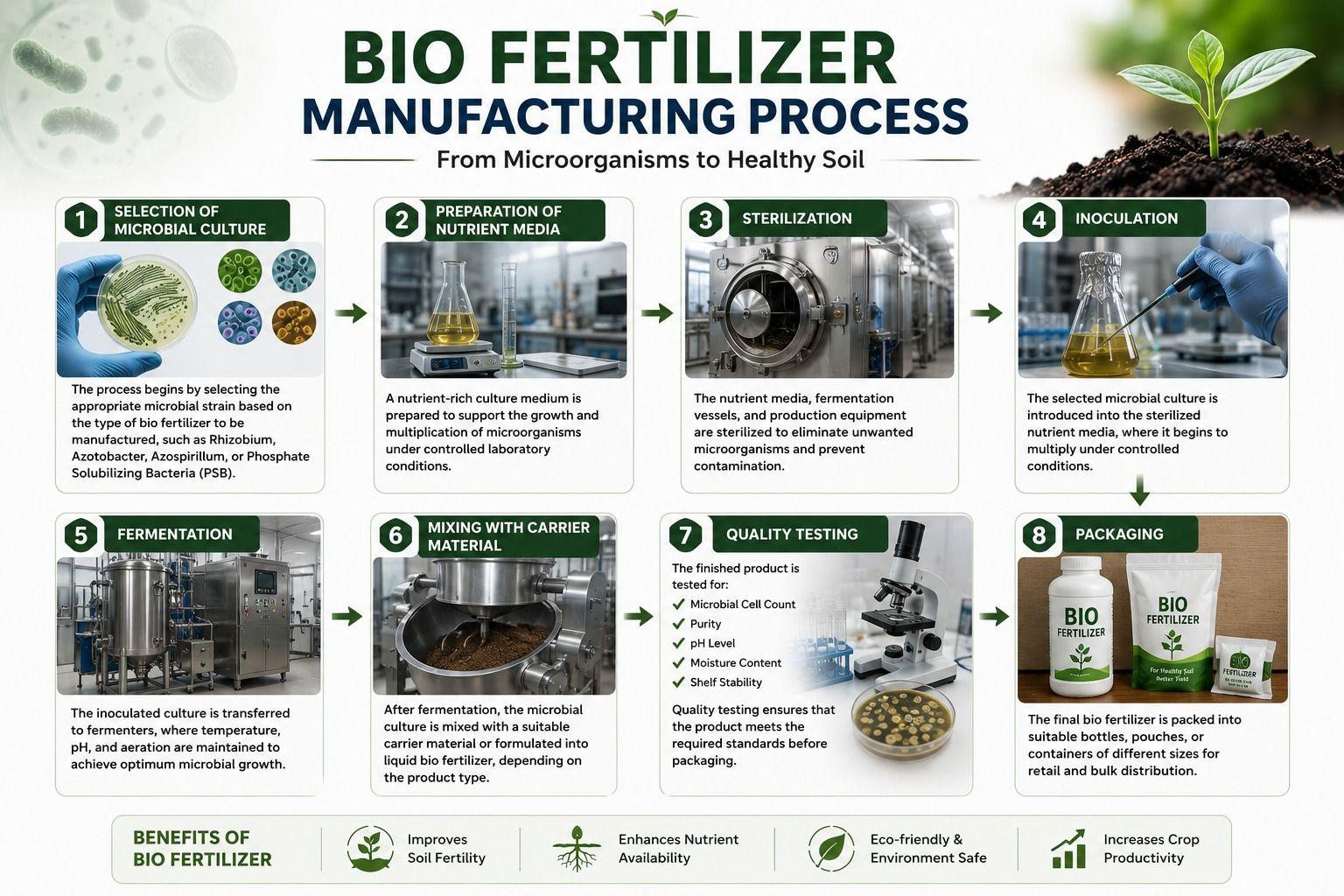
The Bio Fertilizer Manufacturing Process involves cultivating beneficial microorganisms under controlled conditions and converting them into a stable product suitable for agricultural use.
A typical manufacturing process includes the following steps:
The process begins by selecting the appropriate microbial strain based on the type of bio fertilizer to be manufactured, such as Rhizobium, Azotobacter, Azospirillum, or Phosphate Solubilizing Bacteria (PSB).
A nutrient-rich culture medium is prepared to support the growth and multiplication of microorganisms under controlled laboratory conditions.
The nutrient media, fermentation vessels, and production equipment are sterilized to eliminate unwanted microorganisms and prevent contamination.
The selected microbial culture is introduced into the sterilized nutrient media, where it begins to multiply under controlled conditions.
The inoculated culture is transferred to fermenters, where temperature, pH, and aeration are maintained to achieve optimum microbial growth.
After fermentation, the microbial culture is mixed with a suitable carrier material or formulated into liquid bio fertilizer, depending on the product type.
The finished product is tested for:
• Microbial Cell Count
• Purity
• pH Level
• Moisture Content
• Shelf Stability
Quality testing ensures that the product meets the required standards before packaging.
The final bio fertilizer is packed into suitable bottles, pouches, or containers of different sizes for retail and bulk distribution.
Setting up a Bio Fertilizer Plant requires proper planning to ensure efficient production and consistent product quality.
Before establishing a plant, consider the following factors:
Choose a production capacity based on your investment, target market, and expected demand.
Select machinery that matches your production requirements and offers reliable performance with minimal maintenance.
Arrange machines in a logical sequence to ensure smooth movement of raw materials and finished products while minimizing handling time.
A basic laboratory is essential for microbial culture preparation, quality testing, and maintaining product consistency.
Maintaining a clean production environment is critical because microbial contamination can reduce product quality and shorten shelf life.
The machinery required depends on the type of bio fertilizer and production capacity. A typical Bio Fertilizer Manufacturing Plant may include:
• Fermenter
• Media Preparation Tank
• Sterilizer or Autoclave
• Mixing Machine
• Storage Tanks
• Liquid Filling Machine or Powder Packaging Machine
• Sealing Machine
• Labeling Machine
• Laboratory Equipment
• Quality Testing Instruments
Choosing reliable machinery improves production efficiency and helps maintain consistent product quality.
A Bio Fertilizer Plant Project Report is an important document for entrepreneurs planning to establish a manufacturing unit.
A well-prepared project report generally includes:
• Business Overview
• Product Details
• Manufacturing Process
• Machinery Requirement
• Investment Estimate
• Production Capacity
• Raw Material Requirement
• Financial Projections
• Marketing Strategy
The project report helps entrepreneurs understand the technical and financial aspects of the business and is often required when applying for business loans or seeking investment.
Selecting the right equipment supplier plays a major role in the long-term performance of your manufacturing plant.
Before choosing a Bio Fertilizer Plant Manufacturer, consider the following:
• Experience in manufacturing bio fertilizer plants
• Quality of machinery and materials used
• Production capacity offered
• Customization options
• Installation support
• Operator training
• After-sales service
• Availability of spare parts
• Technical assistance for future expansion
Instead of selecting a manufacturer based only on price, evaluate the overall value, product quality, and long-term support offered value,product quality,and long-term support offered.
The profitability of a Bio Fertilizer Manufacturing Plant depends on several factors, including production capacity, product quality, manufacturing efficiency, raw material costs, and market reach.
Since bio fertilizers are used across agriculture, horticulture, nurseries, and organic farming, businesses with consistent product quality and a strong distribution network have better opportunities for long-term growth.
Instead of focusing only on production, manufacturers should also pay attention to quality control, branding, customer relationships, and timely supply to improve business performance.
The major factors affecting profit include:
• Production Capacity
• Product Quality
• Manufacturing Cost
• Raw Material Cost
• Packaging Quality
• Distribution Network
• Brand Reputation
• Market Demand
Manufacturing a quality product is only one part of the business. A well-planned marketing strategy is equally important to reach the right customers.
Partner with fertilizer distributors and agricultural input dealers to expand your market reach.
Your potential customers include:
• Farmers
• Organic Farming Groups
• Agricultural Cooperatives
• Nurseries
• Horticulture Farms
• Plantation Owners
• Greenhouse Operators
Listing your products on platforms like IndiaMART and TradeIndia can help generate enquiries from dealers, wholesalers, and bulk buyers across India.
Professional packaging, proper labeling, and consistent product quality help build trust among customers and distributors.
A professional website, Google Business Profile, and active social media pages can improve your visibility and help potential customers find your business more easily.
Many entrepreneurs focus only on machinery and overlook other important aspects of manufacturing. Avoiding these common mistakes can improve product quality and business performance.
The effectiveness of bio fertilizers depends on the quality of the microbial culture. Always source cultures from reliable suppliers.
Skipping quality testing can result in inconsistent products and reduced customer confidence.
Low-cost machinery may lead to higher maintenance costs, lower efficiency, and inconsistent production.
Contamination during manufacturing can reduce microbial activity and affect product quality.
Producing a quality product is not enough. Building a strong dealer and distributor network is equally important for long-term business growth.

Setting up a Bio Fertilizer Manufacturing Plant requires proper planning, suitable machinery, and the right technical guidance. At StartupHyper, we help entrepreneurs simplify the process of starting and expanding their manufacturing business.
Our support includes:
➡️ Guidance in selecting the right Bio Fertilizer Manufacturing Plant based on your production capacity and investment.
➡️ Assistance in choosing reliable machinery and equipment.
➡️ Project planning and business consultation.
➡️ Support in preparing a Bio Fertilizer Plant Project Report.
➡️ Guidance on production planning and plant setup.
➡️ Assistance in connecting with trusted machinery manufacturers.
Whether you are planning a small-scale unit or a large commercial Bio Fertilizer Plant, StartupHyper helps you make informed decisions at every stage of your manufacturing journey.
A Bio Fertilizer Plant is a manufacturing facility where beneficial microorganisms are processed into bio fertilizers used to improve soil fertility and crop growth.
The investment depends on production capacity, automation level, machinery, and product range. Small-scale plants generally require lower investment than medium or large manufacturing units.
Common machines include fermenters, sterilizers, mixing machines, storage tanks, filling machines, packaging machines, and laboratory equipment.
The primary raw materials include microbial cultures, carrier materials, nutrient media, sterile water, and packaging materials.
Major buyers include fertilizer distributors, agricultural input dealers, farmers, organic farms, nurseries, horticulture businesses, greenhouse operators, and plantation owners.
A project report helps estimate investment, production capacity, machinery requirements, financial projections, and is often required for business loans and funding.
Choose a manufacturer based on machinery quality, production capacity, installation support, technical guidance, after-sales service, and availability of spare parts rather than price alone.
Conclusion
Starting a Bio Fertilizer Manufacturing Plant can be a promising opportunity for entrepreneurs looking to enter the agricultural manufacturing sector. As the demand for sustainable farming solutions continues to grow, quality bio fertilizers are becoming increasingly important for improving soil health and crop productivity.
Success in this business depends on selecting the right manufacturing process, using quality raw materials, investing in reliable machinery, and maintaining consistent product quality. With proper planning and the right technical guidance, entrepreneurs can build a sustainable and scalable manufacturing business.
If you're planning to establish a Bio Fertilizer Plant, StartupHyper can support you with machinery guidance, project planning, and business consultation to help you start with confidence.
📞Call / WhatsApp: 9472093913
📧Email: info@startuphyper.com
🌐 Website: www.startuphyper.com | www.machinehai.com
🏢 Branches: Patna | Gaya | Katihar | Saharsa
Stay updated with the latest tips, trends, and best practices in factory setup and machinery procurement—subscribe to the StartupHyper newsletter!
No spam, we promise. Your inbox is safe with us—only valuable insights.