Read the full article to gain deeper insights and comprehensive information.

Sep 04, 2026
0
Learn about jute bag making machines, including machine types, price, raw materials, manufacturing process, business setup, investment, profit potential, and selling methods.
What Is a Jute Bag Making Machine?
Why Start a Jute Bag Manufacturing Business?
Types of Jute Bag Making Machines
Jute Bag Making Machine Price
Raw Materials Required for Jute Bags
Jute Bag Manufacturing Process
Jute Bag Manufacturing Business Setup
Jute Bag Manufacturing Business Investment
Jute Bag Business Profit Margin
How to Sell Jute Bags
Benefits of Using Jute Bag Making Machines
Challenges in Jute Bag Manufacturing
Common Mistakes to Avoid
How StartupHyper Can Help
Frequently Asked Questions
Conclusion
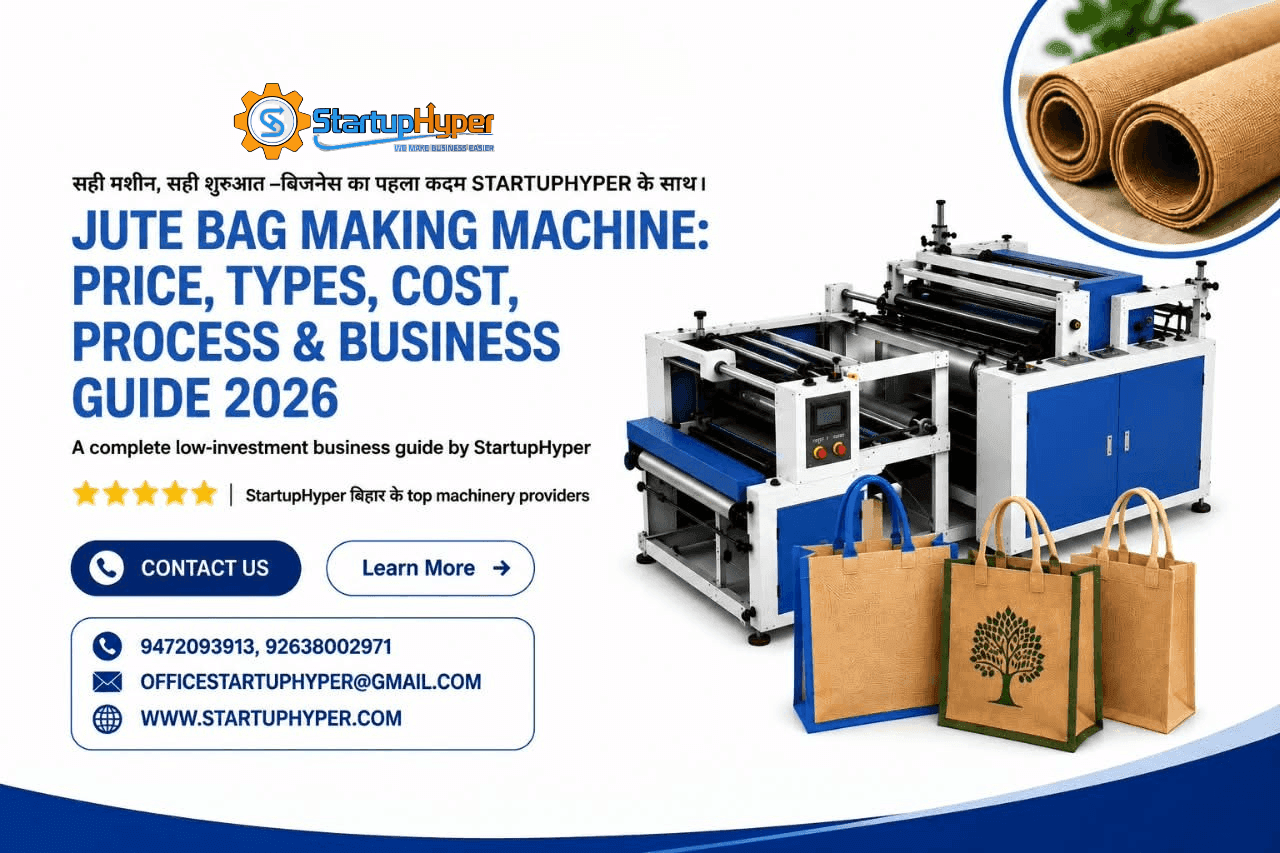
A jute bag making machine is a type of equipment used to manufacture jute bags from jute fabric or other jute-based materials. It helps in performing different production activities such as cutting, stitching, printing, handle attachment, and finishing, depending on the machine and production setup.
Jute bag making machines are commonly used to produce shopping bags, promotional bags, gift bags, packaging bags, and reusable carry bags. By reducing manual work, these machines can improve production speed, consistency, and overall efficiency.
The type of machine required depends on the bag design, production capacity, size, and level of automation. Small businesses may begin with basic cutting and stitching equipment, while larger units can use a combination of specialized machines for higher-volume production.
Starting a jute bag manufacturing business can be a promising opportunity because of the growing demand for eco-friendly and reusable packaging products. As businesses and consumers become more aware of environmental concerns, jute bags are increasingly being used as an alternative to plastic bags.
Some key reasons to start this business include:
The demand for jute bags is increasing as consumers, retailers, and businesses are becoming more interested in sustainable alternatives to plastic bags. This creates a growing market for manufacturers who can supply good-quality jute bags at competitive prices.
Jute is a natural and biodegradable material, which makes jute bags an environmentally friendly option. Their reusable nature also makes them suitable for customers looking for alternatives to single-use plastic packaging.
Jute bags can be used for shopping, packaging, gifting, promotions, events, and corporate purposes. This wide range of applications allows manufacturers to target different types of customers and market segments.
Manufacturers can offer customized jute bags in different sizes, shapes, colours, handle styles, and designs. Logos, brand names, and promotional messages can also be printed on the bags to meet specific customer requirements.
A jute bag manufacturing business can be started on a small scale with basic machinery and gradually expanded as demand increases. Entrepreneurs can increase production capacity by adding more machines and workers over time.
Retailers, corporate companies, educational institutions, event organizers, and wholesalers may require jute bags in large quantities. Bulk orders can help manufacturers generate regular sales and build long-term business relationships.
The shift towards sustainable packaging solutions is creating opportunities for businesses involved in eco-friendly products. Jute bags can serve as a practical packaging option for businesses that want to reduce their dependence on plastic.
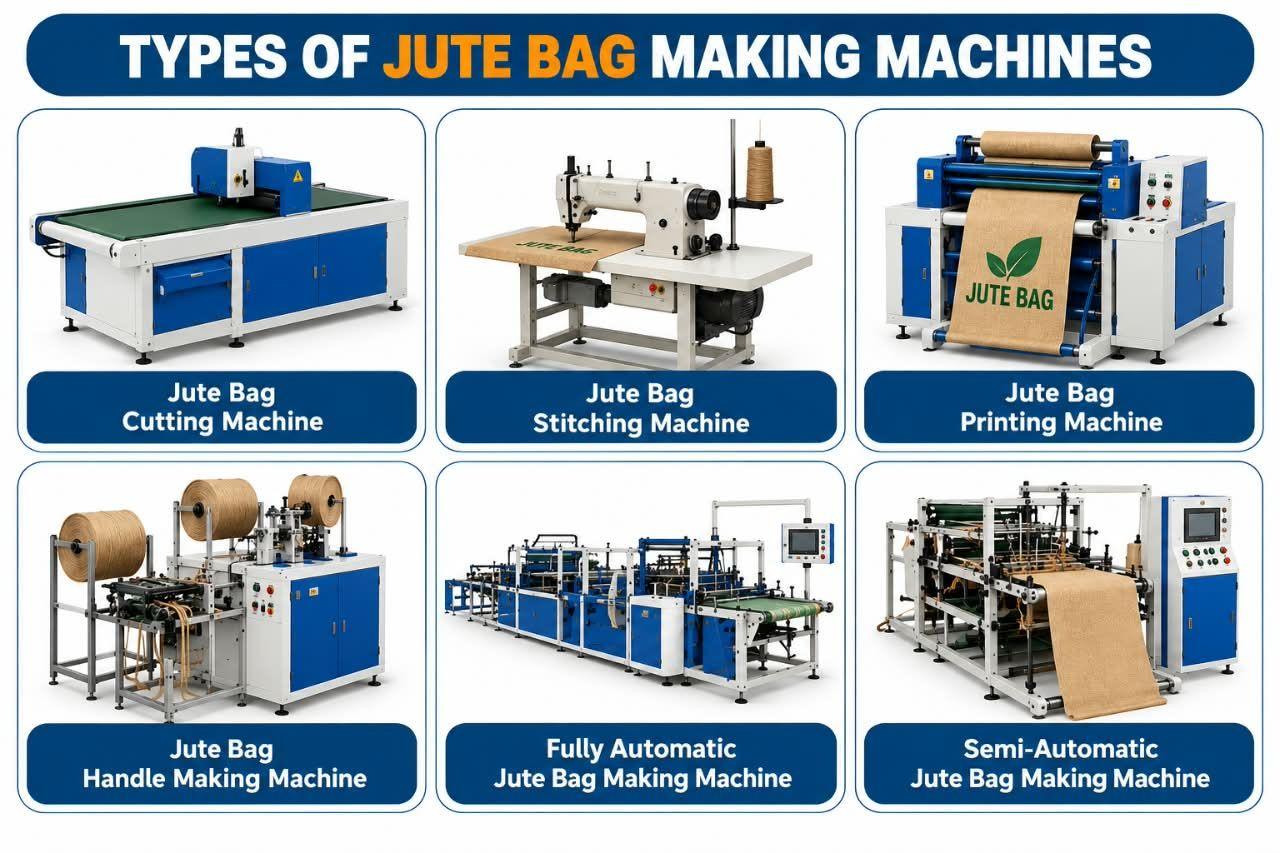
Different machines are used at various stages of jute bag production, from cutting and stitching to printing and complete bag manufacturing. The choice of machine depends on the production capacity, level of automation, and type of bags being manufactured.
A jute bag cutting machine is used to cut jute fabric into the required size and shape before stitching.
A jute bag stitching machine is used to join the cut pieces of jute fabric and form the basic structure of the bag.
A jute bag printing machine is used to add logos, brand names, designs, and promotional messages to jute bags.
A jute bag handle making machine is used to prepare handles from jute yarn or suitable materials for different types of bags.
A fully automatic jute bag machine is designed to automate multiple stages of jute bag production with minimal manual intervention.
A semi-automatic jute bag making machine combines machine-based production with some manual operations. It is generally suitable for small and medium-sized manufacturing units.
The jute bag making machine price varies depending on the machine type, production capacity, automation level, specifications, and manufacturer. Current listings in India show that basic jute bag sewing machines can start from around ₹4,450, while commercial stitching machines may cost around ₹25,000–₹92,000. More advanced jute bag making machines can cost around ₹4 lakh or more.
Printing machines can also vary considerably in price. For example, current listings show jute bag printing machines around ₹1.45 lakh to ₹1.60 lakh, while some higher-capacity models are listed at substantially higher prices.
| Machine Type | Approximate Price |
|---|---|
| Jute Bag Cutting Machine | ₹4 lakh – ₹9.5 lakh+ |
| Jute Bag Stitching Machine | ₹25,000 – ₹92,000 |
| Jute Bag Printing Machine | ₹1.45 lakh – ₹2 lakh+ |
| Semi-Automatic Jute Bag Machine | ₹1.75 lakh – ₹4 lakh+ |
| Fully Automatic Jute Bag Machine | ₹4 lakh – ₹12 lakh+ |
The actual machine cost may differ based on specifications, capacity, customization, taxes, installation, and supplier. For example, one current listing for a jute bag cutting-making machine is ₹4.25 lakh with a stated output of more than 1,000 bags per day. ([aajjo.com][3])
When purchasing machinery, entrepreneurs should compare production capacity, power consumption, automation, maintenance requirements, warranty, and after-sales support rather than selecting a machine only on the basis of price.
The quality of raw materials plays an important role in determining the strength, appearance, durability, and overall quality of jute bags. The materials required may vary depending on the type, design, and customization of the bag.
Jute fabric is the primary raw material used to manufacture jute bags. Different grades, thicknesses, and textures can be selected depending on the required bag quality and design.
Jute yarn can be used for making handles, decorative elements, or other parts of the bag. The thickness and strength of the yarn should be selected according to the bag size and load capacity.
Sewing thread is required to stitch different pieces of jute fabric together. Strong and durable thread helps provide secure and long-lasting seams.
Handles can be made from jute, cotton, rope, or other suitable materials. The choice depends on the bag's design, intended use, and required strength and comfort.
Printing ink is required when manufacturing customized or branded jute bags. It is used to print logos, brand names, designs, and promotional messages on the bags.
Labels and tags can be added to provide brand information, product details, or care instructions. They also help give the finished bags a more professional appearance.
Finished jute bags require suitable packaging materials such as cartons, poly bags, paper packaging, or other protective materials for storage and transportation.
The jute bag manufacturing process involves several stages, starting from fabric preparation and ending with the packaging of finished bags. Each step helps ensure proper shape, strength, quality, and appearance of the final product.
Setting up a jute bag manufacturing business requires proper planning of the production area, machinery, raw materials, workforce, electricity, and storage facilities. A well-organized setup can help maintain smooth production and consistent product quality.
A suitable location should have enough space for machinery installation, production activities, storage, and packaging. Easy access to transportation can also help in receiving raw materials and delivering finished bags.
The required machinery depends on the production capacity and type of jute bags being manufactured. Cutting, stitching, printing, handle-making, and finishing equipment may be installed according to business requirements.
A separate area should be arranged for storing jute fabric, yarn, thread, handles, printing materials, and packaging supplies. Proper storage helps protect materials from moisture, dust, and damage.
The production area should provide sufficient space for cutting, stitching, printing, handle attachment, and finishing. Arranging machines according to the production flow can help reduce unnecessary movement and improve efficiency.
Workers may be required for machine operation, stitching, printing, finishing, quality checking, and packaging. The number of workers depends on the scale of production and level of automation.
A reliable electricity supply is important for operating machines and maintaining uninterrupted production. Proper lighting, ventilation, and other basic utilities should also be arranged.
A dedicated area can be used for quality inspection and final packaging. Finished bags should be checked for stitching, printing, dimensions, handle strength, and overall appearance before dispatch.
The investment required for a jute bag manufacturing business depends on the production scale, machinery, workspace, workforce, and level of automation. A small unit can start with basic equipment, while a larger setup requires higher investment in machinery, infrastructure, and working capital.
| Investment Component | Estimated Cost |
|---|---|
| Machinery & Equipment | ₹2 lakh – ₹8 lakh+ |
| Workspace & Infrastructure | ₹50,000 – ₹2 lakh+ |
| Raw Materials | ₹50,000 – ₹2 lakh |
| Labour & Initial Operating Expenses | ₹50,000 – ₹1.5 lakh |
| Packaging & Branding | ₹20,000 – ₹75,000 |
| Working Capital | ₹50,000 – ₹2 lakh+ |
| Total Estimated Investment | ₹4.2 lakh – ₹16.25 lakh+ |
The actual investment may vary depending on the **machine specifications, production capacity, business scale, location, and supplier**.
The profit margin in the jute bag business depends on the type of bag, raw material cost, production volume, labour expenses, customization, and selling price. Customized and branded bags can generally provide better margins because they offer additional value to customers.
| Factor | Impact on Profit Margin |
|---|---|
| Raw Material Cost | Lower material wastage can help improve profitability. |
| Production Volume | Higher production can help reduce the cost per bag. |
| Labour Cost | Efficient production and suitable machinery can help control labour expenses. |
| Customization | Printed and customized bags can usually be sold at a higher price. |
| Selling Price | Competitive pricing with controlled costs can improve margins. |
| Bulk Orders | Large orders can provide regular sales and better capacity utilization. |
| Packaging & Transportation | Efficient packaging and delivery can help control additional expenses. |
A small or medium-scale jute bag manufacturing business may target an estimated gross profit margin of around 20%–40%, depending on its product mix and operating costs. Actual net profit will be lower after accounting for rent, salaries, electricity, maintenance, transportation, marketing, taxes, and other business expenses.
For example, if a bag costs ₹50 to manufacture and is sold for ₹70, the gross profit is ₹20 per bag, giving a gross margin of approximately 28.6%.
Jute bags can be sold through multiple offline and online sales channels. Choosing the right channel helps manufacturers reach more customers, generate bulk orders, and build a strong market presence.
Approaching local shops, supermarkets, boutiques, and gift stores can help manufacturers build regular customers. Retailers can purchase jute bags in bulk and resell them to their customers.
Wholesalers and distributors can help manufacturers reach larger markets without managing individual retail sales. Offering competitive prices and consistent quality can help develop long-term business relationships.
Companies often use customized jute bags for promotional campaigns, conferences, events, and corporate gifting. Manufacturers can offer bags with company logos and branding to attract bulk corporate orders.
Selling through online marketplaces and e-commerce platforms allows businesses to reach customers beyond their local market. Product images, descriptions, pricing, and customization options can be displayed online.
Platforms such as Instagram, Facebook, and other social media channels can be used to showcase new designs, customized bags, and bulk-order options. Regular promotional content can help attract potential customers.
Using jute bag making machines, we can make the manufacturing process faster, easier, and more efficient. We can also improve production capacity, product quality, and overall productivity by using suitable machinery.
Faster production
Consistent product quality
Reduced labour effort
Lower material wastage
Higher production capacity
Better customization options
Improved production efficiency
Reduced production time
Uniform bag sizes
Improved stitching quality
Jute bag manufacturing can offer good business opportunities, but manufacturers may face challenges related to raw materials, production, quality, labour, and market competition. Understanding these challenges can help in planning the business more effectively.
The price of jute fabric and other raw materials can change due to market demand, availability, and seasonal factors. Such fluctuations can affect production costs and profit margins.
Maintaining consistent quality in every bag can be challenging, especially when production involves different workers and machines. Proper quality checking is important to maintain uniform stitching, finishing, size, and overall appearance.
Finding workers with suitable stitching and machine-handling skills can sometimes be difficult. Skilled workers are important for maintaining production efficiency and product quality.
Manufacturers may face strong competition from other jute bag producers and alternative packaging products. Offering good quality, competitive prices, and attractive designs can help businesses remain competitive.
Regular machine maintenance is necessary to keep production running smoothly. Machine breakdowns can cause production delays and increase repair and maintenance expenses.
Handling large orders within the required time can be challenging. Manufacturers need sufficient raw materials, labour, production capacity, and quality control to complete bulk orders efficiently.
Selecting a machine without considering production capacity, bag size, and product requirements can lead to unnecessary expenses.
Using poor-quality jute fabric, yarn, or accessories can affect the strength, appearance, and durability of the finished bags.
Skipping regular machine maintenance can cause breakdowns, production delays, and higher repair costs.
Failing to check stitching, size, printing, and finishing can result in defective products and customer complaints.
Not properly calculating raw materials, labour, electricity, packaging, transportation, and maintenance costs can reduce actual profit.
Producing bags without understanding customer preferences and market demand can make it difficult to sell the finished products.

StartupHyper can help entrepreneurs who want to start a jute bag manufacturing business by providing support in the initial planning and setup process. It can help with machinery selection, production planning, investment estimation, and business setup so that entrepreneurs can better understand the requirements before starting the business.
StartupHyper can also provide guidance related to manufacturing unit planning, machinery installation, raw materials, packaging, and production requirements. This support can help new entrepreneurs plan their jute bag manufacturing business more effectively and make informed decisions about machinery and other resources.
Help in selecting suitable jute bag making machinery based on production requirements.
Support in planning the manufacturing unit and required infrastructure.
Guidance on estimating machinery, raw material, and overall business investment.
Assistance with machinery installation and basic production requirements.
Support in preparing a basic business plan and project report.
Guidance on packaging, branding, and marketing requirements.
Assistance with technical support and machinery maintenance.
A jute bag making machine is equipment used to cut, stitch, print, and finish jute bags efficiently.
The price may vary depending on the machine type, capacity, automation level, and features. Basic machines generally cost less than fully automatic machines.
The main raw materials include jute fabric, jute yarn, handles, thread, printing materials, and packaging materials.
Yes, jute bag manufacturing can be profitable when businesses maintain controlled production costs, good product quality, and effective sales channels.
Manufacturers can produce shopping bags, promotional bags, grocery bags, gift bags, and customized jute bags.
The investment depends on the machine capacity, production scale, workspace, raw materials, labour, and other operating expenses.
Yes, jute bags can be customized with different sizes, shapes, handles, colors, logos, and printed designs according to customer requirements.
Jute bags can be sold through local retailers, wholesalers, corporate customers, e-commerce platforms, social media, and direct B2B sales.
The jute bag manufacturing business can be a promising opportunity for entrepreneurs due to the growing demand for eco-friendly and reusable packaging products. With the right machinery, raw materials, production process, and quality control, businesses can manufacture different types of jute bags for retail, corporate, promotional, and other applications.
Before starting the business, it is important to carefully plan the investment, manufacturing setup, production capacity, market demand, and selling strategy. Choosing suitable machinery and maintaining consistent product quality can help improve production efficiency and support long-term business growth.
📞Call / WhatsApp: 9472093913
📧Email: info@startuphyper.com
🌐 Website: www.startuphyper.com | www.machinehai.com
🏢 Branches: Patna | Gaya | Katihar | Saharsa
Stay updated with the latest tips, trends, and best practices in factory setup and machinery procurement—subscribe to the StartupHyper newsletter!
No spam, we promise. Your inbox is safe with us—only valuable insights.