Read the full article to gain deeper insights and comprehensive information.

Sep 01, 2026
0
Learn about the mushroom growing business, including its cost, cultivation process, investment requirements, equipment, profit potential, and essential business setup tips.

What Is a Mushroom Growing Business?
Why Start a Mushroom Growing Business?
Types of Mushrooms for Commercial Cultivation
Mushroom Growing Requirements
Mushroom Farming Process
Mushroom Growing Equipment and Machinery
Raw Materials Required
Mushroom Farming Business Setup
Mushroom Farming Investment
How to Sell Mushrooms
Challenges in Mushroom Farming
How StartupHyper Can Help
Frequently Asked Questions
Conclusion
A mushroom growing business involves the commercial cultivation of edible mushrooms under suitable environmental conditions. Mushrooms are generally grown using prepared substrates such as paddy straw, wheat straw, compost, or other suitable agricultural materials.
Unlike traditional crops, mushrooms do not require large areas of farmland. Depending on the variety, they can be cultivated in rooms, sheds, warehouses, or specially designed growing units. This makes mushroom cultivation an attractive option for entrepreneurs with limited space.
Common commercially cultivated varieties include button mushrooms, oyster mushrooms, milky mushrooms, and paddy straw mushrooms. Each variety has different requirements related to temperature, humidity, ventilation, substrate, and growing conditions.
A mushroom growing business can be started on a small, medium, or commercial scale. Entrepreneurs can sell fresh mushrooms to local markets, restaurants, hotels, retailers, and consumers. They can also explore value-added products such as dried mushrooms and mushroom powder to create additional business opportunities.
Starting a mushroom growing business can be a promising opportunity for farmers and entrepreneurs. It requires comparatively less space than traditional farming and offers opportunities for fresh as well as value-added mushroom products.
Mushrooms can be cultivated in rooms, sheds, warehouses, or growing units using racks and vertical space. This makes mushroom farming suitable for entrepreneurs who have limited land.
Mushrooms are widely used in homes, restaurants, hotels, cafés, catering businesses, and food-processing industries. Increasing awareness of nutritious food can also create opportunities for mushroom growers.
Certain mushroom varieties can be grown using paddy straw, wheat straw, and other agricultural residues as growing substrates. This allows entrepreneurs to make productive use of agricultural waste.
Some varieties, especially oyster mushrooms, can be harvested within a relatively short period when suitable growing conditions are maintained. This can allow farmers to plan multiple production cycles.
Mushroom cultivation can be started on a small scale and gradually expanded as production experience, customer demand, and market reach increase. This makes it suitable for beginners as well.
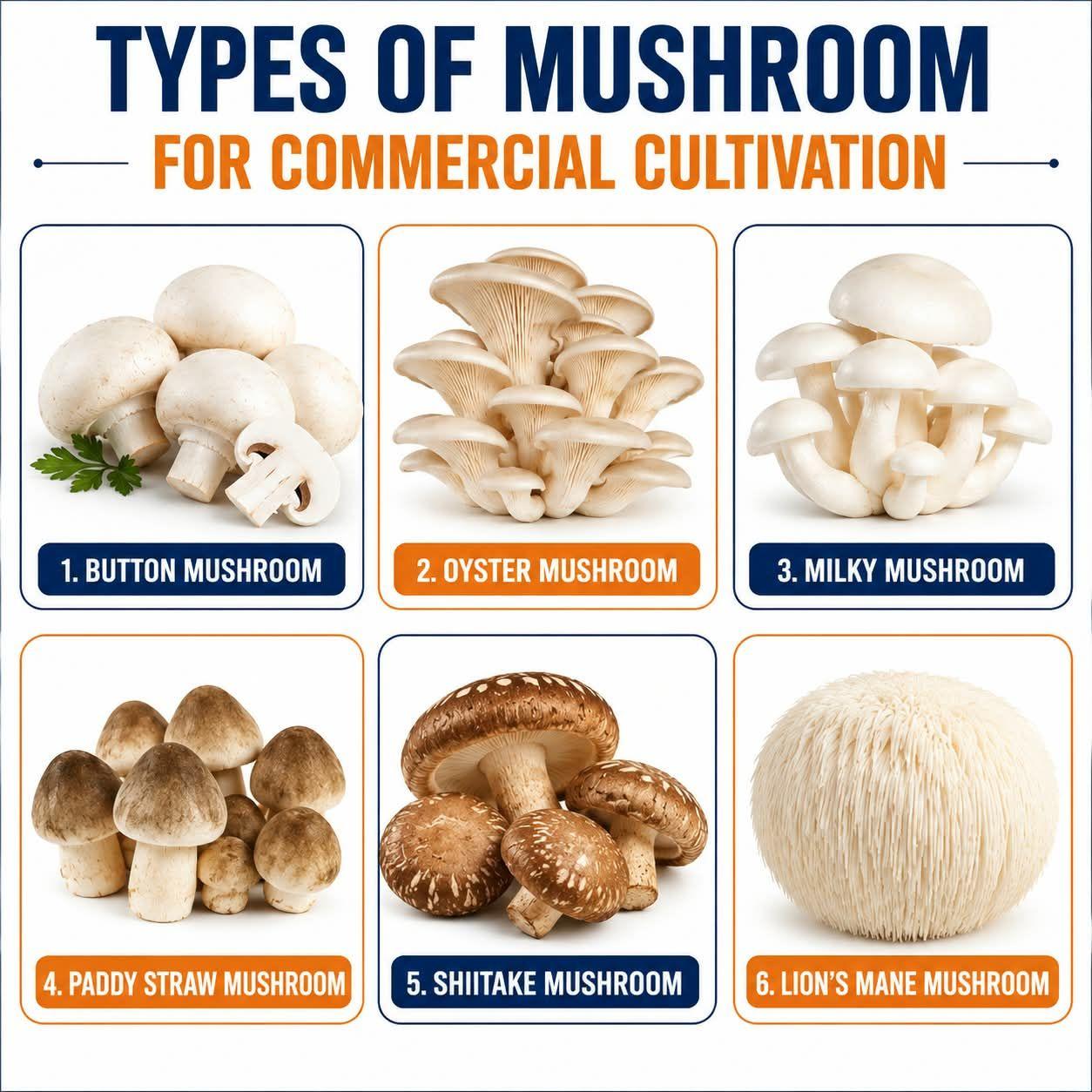
Different mushroom varieties can be cultivated commercially depending on climate, growing conditions, investment, production requirements, and market demand. Some popular varieties include:
A successful mushroom growing business requires suitable environmental conditions and hygienic cultivation practices.
The main requirements include:
Growing room or shed
Quality mushroom spawn
Suitable growing substrate
Clean water supply
Temperature control
Humidity control
Proper ventilation
Suitable lighting
Growing bags or trays
Racks or shelves
Hygiene and sanitation
Pest and contamination control
Electricity supply
Harvesting and storage facilities
Mushroom farming involves several steps, from preparing the growing material to harvesting and packaging the final product. The exact process may vary depending on the mushroom variety.
Choose a suitable mushroom variety based on the local climate, available space, investment capacity, and market demand. Common choices include button, oyster, milky, paddy straw, shiitake, and lion's mane mushrooms.
Prepare the appropriate growing substrate according to the selected mushroom variety. Materials such as paddy straw, wheat straw, sawdust, or compost may be used.
Treat the substrate using an appropriate pasteurisation or sterilisation method to reduce unwanted microorganisms and contamination. The method depends on the mushroom variety and cultivation system.
Once the substrate is properly prepared and cooled, introduce the mushroom spawn into it. Good-quality spawn helps the mushroom mycelium colonise the growing material effectively.
Keep the spawned substrate under the required temperature, humidity, and ventilation conditions. During this stage, the mushroom mycelium gradually spreads throughout the substrate.
After the substrate is sufficiently colonised, adjust the temperature, humidity, ventilation, and light conditions according to the selected mushroom variety to encourage fruiting.
Small mushroom growths begin to appear and gradually develop into mature mushrooms. Proper moisture, humidity, fresh air, and cleanliness should be maintained during this stage.
Harvest the mushrooms when they reach the appropriate size and maturity for the intended market. Careful harvesting helps maintain product quality and minimise damage.
After harvesting, mushrooms are sorted and graded according to their size, appearance, freshness, and quality. Damaged or contaminated mushrooms should be separated.
Pack the mushrooms in suitable food-grade packaging that protects them from physical damage and helps maintain freshness during transportation and storage.
Fresh mushrooms should be stored under appropriate temperature and humidity conditions and transported quickly to the market because they generally have a limited shelf life.
The final products can be sold to local markets, retailers, restaurants, hotels, supermarkets, wholesalers, and direct consumers. Value-added products can also be developed from suitable mushroom varieties.
A small mushroom unit may begin with basic equipment, while commercial farms generally require more specialised infrastructure.
Important equipment may include:
| Equipment | Purpose |
|---|---|
| Growing racks | Efficient use of vertical space |
| Mushroom growing bags | Holding substrate and spawn |
| Humidifier | Maintaining suitable humidity |
| Temperature controller | Managing temperature |
| Exhaust/ventilation system | Air circulation |
| Sprayer | Maintaining moisture |
| Sterilisation/pasteurisation equipment | Substrate treatment |
| Weighing machine | Measuring mushrooms and materials |
| Sealing machine | Packaging fresh mushrooms |
| Refrigeration unit | Short-term storage |
| Cleaning and sanitation equipment | Maintaining hygiene |
The equipment required will depend heavily on the mushroom variety and scale of production.
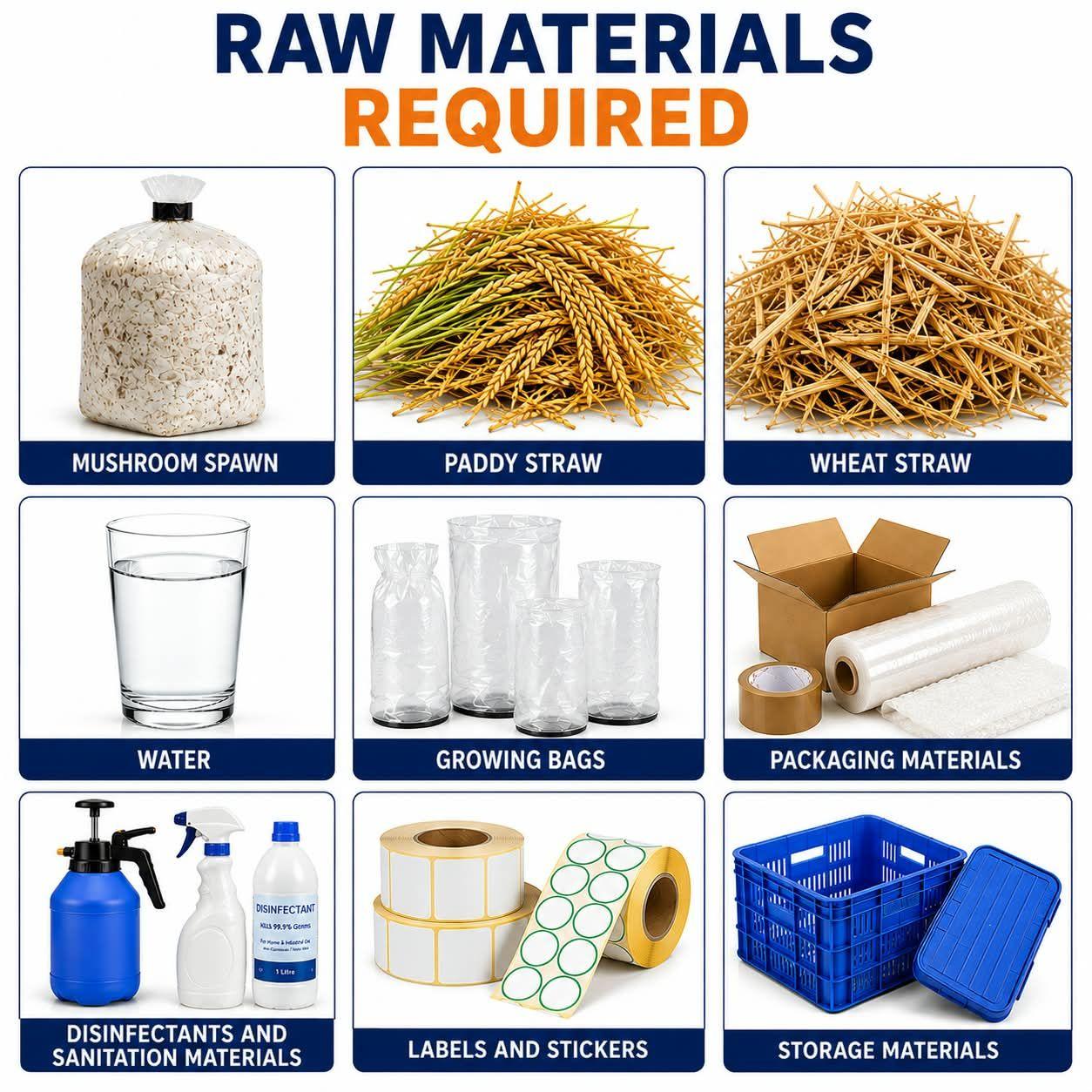
The major raw materials required for a mushroom growing business include:
Mushroom spawn is the planting material used to grow mushrooms. Good-quality and disease-free spawn is important for healthy mycelium growth and better production.
Paddy straw is commonly used as a growing substrate, particularly for varieties such as oyster and paddy straw mushrooms. It provides a suitable medium for mycelium development.
Wheat straw can also be used as a substrate for mushroom cultivation. It is easily available in many agricultural regions and can be prepared before adding mushroom spawn.
Clean water is required for preparing and moistening the substrate and maintaining appropriate moisture and humidity during cultivation.
Growing bags are used to hold the prepared substrate and spawn during cultivation. They should be suitable for the selected cultivation method and maintained hygienically.
Packaging materials such as trays, pouches, boxes, and food-grade films are used to pack harvested mushrooms and protect them during storage and transportation.
Disinfectants and sanitation materials are used to maintain cleanliness in growing rooms, equipment, tools, and working surfaces and help reduce contamination.
Labels and stickers are used for branding and product identification. They can also provide information such as product name, weight, packing date, and other required details.
Storage materials such as crates, trays, containers, and refrigeration facilities help protect harvested mushrooms and maintain their quality before they reach the market.
A mushroom business can be started on a small, medium, or commercial scale depending on the investment, production capacity, available space, and target market.
A beginner can start with:
One or two growing rooms
Basic racks
Manual spraying
Growing bags
Small quantities of spawn
Local packaging
Direct local sales
A larger operation may require:
Multiple growing rooms
Better humidity and temperature control
Dedicated substrate preparation area
Storage facilities
Packaging equipment
Refrigeration
Regular labour
A commercial mushroom farm may include:
Climate-controlled growing rooms
Automated environmental controls
Large-scale substrate preparation
Cold storage
Dedicated packaging area
Transportation facilities
Quality-control systems
Distribution network
The investment required depends on the mushroom variety, production capacity, infrastructure, equipment, and level of environmental control.
Typical investment components include:
| Investment Area | Examples |
|---|---|
| Infrastructure | Shed, rooms, renovation |
| Equipment | Racks, humidifiers, ventilation |
| Raw Materials | Spawn, straw, bags |
| Packaging | Trays, pouches, labels |
| Labour | Cultivation and harvesting workers |
| Utilities | Electricity and water |
| Storage | Refrigerator or cold room |
| Marketing | Branding, transportation and promotion |
| Working Capital | Day-to-day operating expenses |
Entrepreneurs should estimate both initial setup costs and ongoing operating expenses before starting the business.
Mushrooms can be sold through different offline and online sales channels. Choosing the right channel depends on production capacity, target customers, location, and product shelf life.
Fresh mushrooms can be supplied to local vegetable markets, farmers' markets, and nearby retailers. This is suitable for small-scale growers who want to sell their produce locally.
Restaurants, hotels, cafés, and catering businesses can become regular bulk customers. Establishing direct relationships with these buyers can help create consistent demand.
Mushrooms can be supplied to supermarkets, grocery stores, and speciality food shops. Attractive packaging, consistent quality, and reliable supply can help build retail partnerships.
Large quantities can be sold to wholesalers and distributors who further supply mushrooms to retailers and food businesses. This can be useful for medium and commercial-scale farms.
Growers can sell directly to customers through WhatsApp, social media, local delivery, and community networks. Direct selling can help build a local customer base.
Mushrooms can be marketed through online grocery platforms, local delivery services, and the business's own online channels, depending on availability in the target area.
Instead of selling only fresh mushrooms, entrepreneurs can explore products such as dried mushrooms, mushroom powder, pickles, and snacks. These products can provide additional sales opportunities and potentially improve shelf life.
Mushroom farming can be a profitable business, but growers may face several challenges during cultivation, harvesting, storage, and marketing.
Maintaining the correct temperature and humidity can be challenging, especially when weather conditions change. Improper environmental conditions can affect mushroom growth and yield.
Bacteria, mould, and other microorganisms can contaminate the growing substrate and negatively affect production. Maintaining proper hygiene and sanitation is essential.
Poor-quality or contaminated mushroom spawn can lead to weak mycelium growth and lower production. Reliable sources should be selected for purchasing spawn.
Fresh mushrooms are highly perishable and can lose quality quickly if they are not stored and transported properly. Timely selling and suitable refrigeration can help reduce losses.
Mushroom prices can change based on season, supply, demand, quality, and local market conditions. Price fluctuations can affect the expected profit of growers.
Successful cultivation requires knowledge of substrate preparation, spawning, environmental control, harvesting, and hygiene. Beginners may need proper training before starting commercial production.
Pests and diseases can damage the crop and reduce productivity. Regular monitoring and good sanitation practices are important for preventing such problems.
Finding reliable buyers and maintaining a consistent sales network can be difficult for new growers. Proper planning for transportation, packaging, and market connections is important.

StartupHyper can help entrepreneurs who are planning to start a mushroom farming business by providing guidance throughout the initial business planning and setup process. It can help beginners understand the requirements related to machinery, infrastructure, investment, production, and packaging.
With the right planning and guidance, entrepreneurs can better understand their business requirements and make informed decisions before investing in the mushroom farming setup.
Guidance on business planning and production requirements
Assistance in selecting suitable mushroom farming machinery and equipment
Support in planning the cultivation unit and required infrastructure
Help in estimating initial investment and operating costs
Guidance on raw materials, packaging, and storage requirements
Support in understanding the basic business setup process
Assistance with planning for business growth and expansion
Yes, mushroom farming can be a profitable business when proper cultivation methods, cost management, product quality, and marketing strategies are followed.
Oyster mushroom is generally considered a suitable option for beginners because it can be cultivated with relatively simple infrastructure and suitable agricultural substrates.
The investment depends on the mushroom variety, production capacity, infrastructure, equipment, and scale of the business. A small-scale unit requires less investment than a commercial setup.
Common raw materials include mushroom spawn, paddy straw, wheat straw, water, growing bags, disinfectants, packaging materials, and storage materials.
Yes, mushrooms can be cultivated in rooms, sheds, or small growing units. Racks and vertical growing systems can help make efficient use of available space.
The growing period depends on the mushroom variety, cultivation method, and environmental conditions. Some varieties can be harvested within a relatively short production cycle.
Mushrooms can be sold to local markets, restaurants, hotels, supermarkets, retailers, wholesalers, and direct consumers. Online and local delivery channels can also be explored.
Common challenges include temperature and humidity control, contamination, poor-quality spawn, short shelf life, and finding reliable markets. Proper planning and regular monitoring can help manage these challenges.
Starting a mushroom growing business can be a promising opportunity for farmers and entrepreneurs looking to enter the agriculture and food production sector. Mushrooms can be cultivated in limited space and different varieties can be selected according to the local climate, available resources, and market demand.
A successful mushroom business requires proper cultivation practices, quality spawn, suitable growing conditions, hygiene, equipment, packaging, and storage. Entrepreneurs should also carefully plan their investment, production capacity, and sales channels before starting the business.
With proper business planning, technical knowledge, effective marketing, and consistent product quality, a mushroom growing business can be developed from a small-scale operation into a larger commercial venture. Exploring value-added mushroom products can also create additional business and revenue opportunities.
📞Call / WhatsApp: 9472093913
📧Email: info@startuphyper.com
🌐 Website: www.startuphyper.com | www.machinehai.com
🏢 Branches: Patna | Gaya | Katihar | Saharsa
Stay updated with the latest tips, trends, and best practices in factory setup and machinery procurement—subscribe to the StartupHyper newsletter!
No spam, we promise. Your inbox is safe with us—only valuable insights.