Read the full article to gain deeper insights and comprehensive information.
Aug 04, 2026
0
Learn about industrial sewing machines, their types, applications, features, price, and how to choose the right machine for garment, leather, footwear, and textile manufacturing businesses.
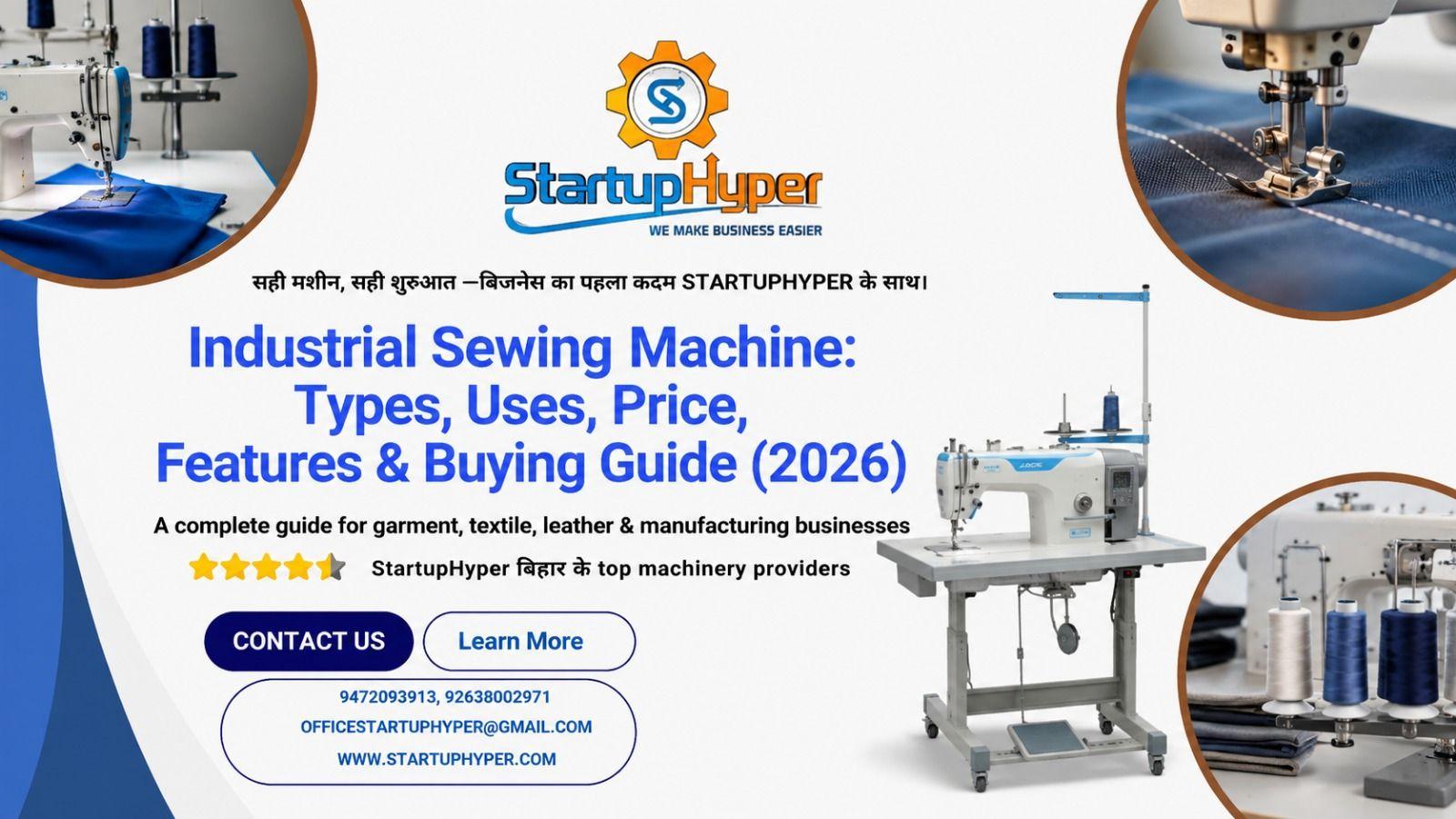
The garment and textile industry is one of the fastest-growing manufacturing sectors in India, and an Industrial Sewing Machine is the backbone of this industry. Whether you're starting a garment manufacturing unit, leather products business, footwear factory, or bag manufacturing business, selecting the right sewing machine directly impacts your production speed, product quality, and profitability.
Unlike household sewing machines, industrial sewing machines are built for continuous operation, high-speed stitching, and handling heavy fabrics with precision. They are designed to work for long hours while maintaining consistent stitch quality, making them ideal for commercial production.
In this guide, you'll learn about industrial sewing machine types, features, applications, price range, and how to choose the right machine for your manufacturing business.
An Industrial Sewing Machine is a heavy-duty sewing machine specially designed for commercial and factory use. These machines can operate continuously for several hours and are capable of producing thousands of stitches per minute.
Industrial sewing machines are widely used in garment factories, textile units, footwear manufacturing plants, leather industries, upholstery businesses, and home furnishing production units.
Compared to domestic sewing machines, industrial models offer higher production capacity, stronger stitching, longer service life, and better operational efficiency.
Modern industrial sewing machines come with advanced features that improve productivity and reduce production costs.
| Feature | Benefit |
|---|---|
| High-Speed Stitching | Faster production output |
| Heavy-Duty Construction | Long machine life |
| Servo Motor Technology | Lower electricity consumption |
| Adjustable Stitch Length | Better flexibility |
| Automatic Lubrication | Reduced maintenance |
| Low Noise & Vibration | Comfortable operation |
| Reverse Stitch Function | Stronger seam locking |
| Precision Stitching | Consistent product quality |
Different manufacturing businesses require different sewing operations. Choosing the correct machine depends on your product and fabric type.
This is the most commonly used industrial sewing machine and is suitable for straight stitching.
Applications
• Shirts
• T-Shirts
• School Uniforms
• Jeans
• Women's Wear
• Kids' Garments
A double needle machine creates two parallel stitch lines simultaneously, making seams stronger and more attractive.
Best For
• Denim
• Jackets
• Sportswear
• Workwear
• Decorative Stitching
An overlock machine trims fabric edges while stitching, preventing fraying and giving garments a professional finish.
Used In
• Hosiery
• Knitwear
• T-Shirts
• Innerwear
• Stretch Fabrics
Flatlock machines create flat and stretchable seams commonly seen in activewear and sportswear.
Suitable For
• Gym Wear
• Leggings
• Sports Clothing
• Undergarments
This machine is mainly used for decorative stitching and attaching elastic materials.
Leather sewing machines are specially designed for thick materials such as leather, canvas, rexine, and upholstery.
• Leather Bags
• Wallets
• Belts
• Shoes
• Upholstery Products
Industrial sewing machines are used across several manufacturing industries.
| Industry | Products Manufactured |
|---|---|
| Garment Manufacturing | Shirts, T-Shirts, Jeans, Uniforms |
| Footwear Industry | Sports Shoes, Leather Shoes, Sandals |
| Leather Industry | Wallets, Bags, Belts |
| Textile Industry | Curtains, Bedsheets, Cushion Covers |
| Home Furnishing | Sofa Covers, Upholstery |
| Industrial Products | PPE Kits, Safety Covers, Tarpaulins |
Investing in an industrial sewing machine offers several advantages for manufacturers.
• High production speed for bulk manufacturing
• Better stitch quality and product finishing
• Lower labour cost per product
• Continuous operation for long working hours
• Energy-efficient servo motor options
• Suitable for light, medium, and heavy fabrics
• Longer machine lifespan with proper maintenance
• Higher production efficiency and profitability
Before purchasing an industrial sewing machine, consider the following factors.
Identify whether you'll manufacture garments, bags, shoes, upholstery, or leather products.
Light fabrics require different machines than denim, leather, or canvas.
Choose a machine based on your expected daily production.
Servo motor machines consume less electricity and provide better speed control than clutch motor machines.
Always buy from a supplier that provides installation support, spare parts availability, and after-sales service.
The cost depends on the machine type, brand, automation level, and production capacity.
| Machine Type | Approximate Price |
|---|---|
| Single Needle Lock Stitch Machine | ₹18,000 – ₹35,000 |
| Double Needle Sewing Machine | ₹30,000 – ₹60,000 |
| Overlock Machine | ₹22,000 – ₹55,000 |
| Flatlock Machine | ₹35,000 – ₹80,000 |
| Heavy Duty Leather Sewing Machine | ₹40,000 – ₹1,20,000 |
Prices are indicative and may vary depending on the manufacturer and machine specifications.
The demand for ready-made garments, school uniforms, corporate apparel, leather products, sportswear, and bags continues to grow in India. Even a small production unit equipped with multiple industrial sewing machines can generate attractive revenue.
| Number of Machines | Daily Production |
|---|---|
| 2 Machines | 80–120 Garments |
| 5 Machines | 180–250 Garments |
| 10 Machines | 400–600 Garments |
| Particular | Estimated Value |
|---|---|
| Production | 200 Garments/Day |
| Average Selling Price | ₹300/Piece |
| Estimated Daily Revenue | ₹60,000 |
| Monthly Working Days | 25 Days |
| Estimated Monthly Revenue | ₹15,00,000 |
Revenue depends on product category, selling price, labour efficiency, and customer orders.
Proper maintenance helps improve machine life and production efficiency.
• Clean dust and thread residue daily.
• Replace damaged needles regularly.
• Use high-quality sewing thread.
• Check thread tension before every production shift.
• Lubricate moving parts as recommended by the manufacturer.
• Schedule preventive maintenance at regular intervals.
StartupHyper helps entrepreneurs, MSMEs, and manufacturers choose the right industrial machinery based on their production requirements. From selecting the right sewing machine to complete manufacturing setup guidance, our experts assist businesses at every stage.
We provide:
• Industrial sewing machines for different applications
• Business setup consultation
• Machine selection guidance
• Manufacturing project support
• Installation assistance
• After-sales support
Whether you're planning to start a garment factory, leather goods unit, footwear manufacturing business, or textile production line, StartupHyper helps you choose the right machinery for long-term growth.
Industrial sewing machines are used for commercial stitching in garment, textile, footwear, leather, upholstery, and bag manufacturing industries.
A Single Needle Lock Stitch Machine is the most commonly used machine for garment production, while Overlock and Flatlock machines are used for finishing and stretch fabrics.
Yes. Heavy-duty industrial sewing machines can stitch denim, leather, canvas, rexine, upholstery, and other thick materials with ease.
With proper maintenance and regular servicing, a quality industrial sewing machine can provide reliable performance for many years.
Yes. Small garment units, tailoring businesses, and startup manufacturers can begin with one or two industrial sewing machines and expand production as demand increases.
Contact StartupHyper today to get expert consultation and find the right industrial sewing machine for your business.
📞Call / WhatsApp: 9472093913
📧Email: info@startuphyper.com
🌐 Website: www.startuphyper.com | www.machinehai.com
🏢 Branches: Patna | Gaya | Katihar | Saharsa
Stay updated with the latest tips, trends, and best practices in factory setup and machinery procurement—subscribe to the StartupHyper newsletter!
No spam, we promise. Your inbox is safe with us—only valuable insights.