Read the full article to gain deeper insights and comprehensive information.

Aug 24, 2026
0
Learn about fire extinguisher prices in India, available sizes, types, applications, and important factors to consider before buying the right fire extinguisher for home, office, shop, or industrial area.

Fire Extinguisher Price in India
Fire Extinguisher Sizes in india
Fire Extinguisher Price for Home, Office & Business
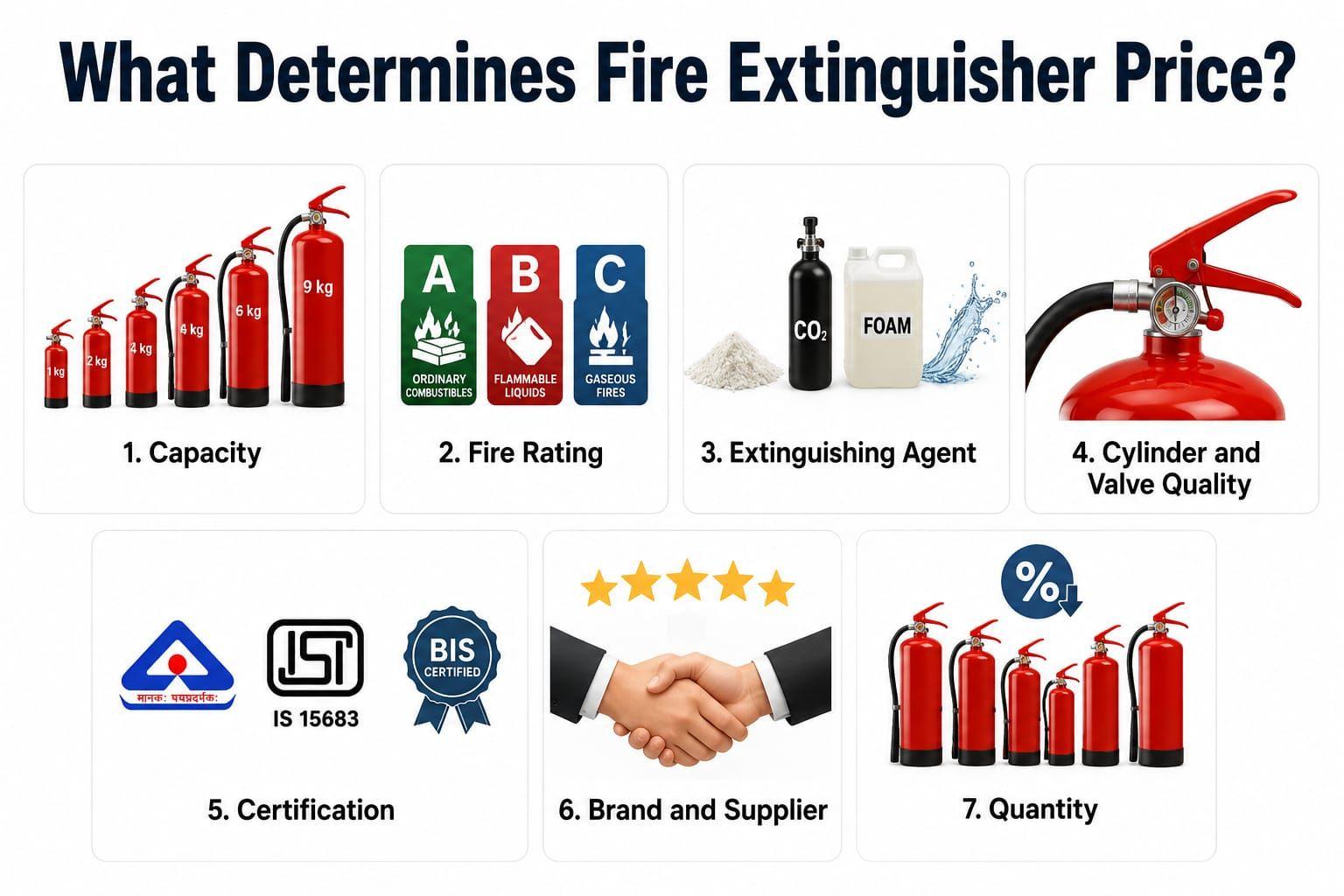
What Determines Fire Extinguisher Price?
Which Fire Extinguisher Size Should You Buy?
Which Fire Extinguisher Size Should You Buy?
How to Check a Fire Extinguisher Before Buying
Fire Extinguisher Buying Checklist
New vs Refurbished Fire Extinguishers
Maintenance, Refilling & Total Cost
How to Compare Fire Extinguisher Quotations
Common Buying Mistakes to Avoid
How StartupHyper Can Help
Frequently Asked Questions
Conclusion
The fire extinguisher price in India depends on factors such as type, capacity, brand, fire rating, certification, and quality. In 2026, basic ABC dry powder extinguishers are available across a wide price range. For example, current listings show 4 kg ABC extinguishers from around ₹850 to ₹3,900, depending on the manufacturer and specifications.
Generally, a 1 kg or 2 kg extinguisher is suitable for smaller spaces and can cost around ₹1,000–₹2,000, while 4 kg or 5 kg ABC extinguishers may cost approximately ₹1,300–₹3,000+ . CO₂ extinguishers are usually more expensive; a 2 kg CO₂ model, for example, may be listed around ₹4,500.
| Type | Common Size | Indicative Price Range |
|---|---|---|
| ABC Dry Powder | 1 kg | ₹900–₹1,500 |
| ABC Dry Powder | 2 kg | ₹1,000–₹1,800 |
| ABC Dry Powder | 4 kg | ₹1,200–₹4,000+ |
| ABC Dry Powder | 6 kg | ₹1,500–₹4,500+ |
| ABC Dry Powder | 9 kg | ₹2,200–₹5,000+ |
| CO₂ | 2 kg | ₹3,500–₹6,000+ |
| CO₂ | 4.5 kg | ₹5,000–₹9,000+ |
| Foam | 6–9 L | ₹4,000–₹8,000+ |
| Clean Agent | 2–6 kg | ₹4,000–₹10,000+ |
Fire extinguishers are available in different sizes and capacities to suit different locations and fire risks. The right size depends on the area, type of fire, level of risk, and required fire rating. Smaller extinguishers are convenient for homes, cars, and small shops, while larger units are generally used in offices, warehouses, factories, and commercial buildings.
| Extinguisher Category | Common Standard Capacities |
|---|---|
| Water | 2, 3, 4, 6, 9 L |
| Foam | 2, 3, 4, 6, 9 L |
| ABC / BC / D Powder | 1, 2, 4, 6, 9, 12 kg |
| CO₂ | 2, 3, 4, 5 kg |
| Clean Agent | 2, 4, 6 kg |
| Water Mist | 2, 3, 4, 6, 9 L |
Why size matters: A larger extinguisher contains more agent, but it may also be heavier and harder for some users to operate. The best choice is the capacity and fire rating appropriate to the hazard and the people expected to use
The price of a fire extinguisher depends mainly on its type, capacity, brand, certification, and application. For general-purpose protection, ABC dry powder extinguishers are commonly available in 1–9 kg capacities, with current Indian listings showing prices from around ₹1,300 for 1 kg to ₹6,000+ for 9 kg models
| Place of Use | Recommended Size | Common Type | Indicative Price |
|---|---|---|---|
| Home | 1–2 kg | ABC Dry Powder | ₹900–₹2,000 |
| Home Kitchen | 2 kg | ABC / Kitchen Type | ₹1,200–₹3,500+ |
| Small Office | 2–4 kg | ABC Dry Powder | ₹1,300–₹4,000 |
| Large Office | 4–6 kg | ABC / CO₂ | ₹2,000–₹7,000+ |
| Small Shop | 2–4 kg | ABC Dry Powder | ₹1,000–₹4,000 |
| Restaurant / Business | 4–6 kg | ABC / Foam / Wet Chemical | ₹2,500–₹9,000+ |
| Warehouse / Factory | 6–9 kg | ABC Dry Powder | ₹3,000–₹7,000+ |
| Server / Electrical Room | 2–4.5 kg | CO₂ / Clean Agent | ₹4,000–₹15,000+ |
These are indicative prices, and actual prices can vary by brand, certification, seller, GST, and specifications.
For example, Kanex currently lists 2 kg ABC at ₹2,610, 4 kg ABC at ₹3,929, and 6 kg ABC at ₹4,354
The right fire extinguisher size depends on the place, fire risk, and type of fire you may face. Choose a size that provides adequate coverage and can be easily handled when neede
| Location / Use | Possible Starting Option |
|---|---|
| Small Shop | 2–4 kg ABC |
| Office | 2–4 kg ABC; CO₂ where appropriate |
| Electrical Equipment Area | CO₂ or another specifically rated extinguisher |
| Warehouse | 6–9 kg ABC or another suitable rated option |
| Factory | Based on the specific industrial hazard |
| Home | Based on the specific fire risks |
| Commercial Kitchen | Extinguisher specifically rated for the cooking-fire hazard |
For a home, do not choose an extinguisher only because it is small or inexpensive. Consider the likely hazards, including cooking areas, electrical equipment and combustible household materials, and select a product whose rating and agent are appropriate.
For businesses, consider the location of each extinguisher, the hazards in each zone, accessibility, signage, inspection and maintenance requirements, and whether staff know how to respond safely.
BIS identifies IS 15683:2018 as the relevant standard for portable fire extinguishers. Verify that the product and certification information are genuine and applicable to the model being purchased.
Look at the manufacturer's declared fire rating rather than judging performance from the extinguisher's weight alone.
Review capacity, agent, manufacturer details, standard/certification information, operating instructions and other required markings.
Avoid damaged, heavily corroded, leaking or visibly compromised cylinders.
Where the model uses a pressure indicator, check that it is in the appropriate operating range and that the unit has not been tampered with.
For business purchases, ask about installation, inspection, servicing, refilling and replacement support.
A clear invoice helps with warranty, traceability and future servicing.
Use this checklist before purchasing a fire extinguisher for your home, office, shop, or business:
Check the type of fire the extinguisher is designed to handle.
Choose the correct capacity and size for the location.
Check the fire rating and suitability for the intended application.
Verify the required certification and standard markings.
Check the manufacturing date and product details.
Inspect the cylinder, valve, hose, and safety pin for visible damage.
Make sure the pressure indicator is in the appropriate range, where applicable.
Check the brand and manufacturer reputation.
Ask about warranty, servicing, and refilling facilities.
Compare the total cost, including accessories, installation, maintenance, and refilling.
Purchase from a reliable and authorised supplier.
A new fire extinguisher is unused and comes directly from the manufacturer or supplier, while a Refurbished extinguisher is a previously used unit that has been inspected, serviced, and restored for further use.
The choice depends on budget, condition, certification, and the level of fire protection required.
| Factor | New Fire Extinguisher | Refurbished Fire Extinguisher |
|---|---|---|
| Condition | Brand new and unused | Previously used and restored |
| Cost | Generally higher | Generally lower |
| Reliability | Usually more predictable | Depends on refurbishment quality |
| Cylinder Condition | New | Must be carefully inspected |
| Certification | Should have required certification | Should have valid certification after servicing |
| Warranty | Usually available | May be limited or unavailable |
| Best For | Homes, offices, businesses, and critical areas | Budget-conscious applications where properly refurbished units are permitted |
| Long-Term Value | Higher initial cost but greater confidence | Lower initial cost but requires careful verification |
Regular maintenance is important to ensure that a fire extinguisher remains safe, functional, and ready to use during an emergency. It should be checked for visible damage, corrosion, leakage, pressure problems, blocked hoses, damaged safety pins, and other issues. Periodic inspection and professional servicing can help identify problems early and extend the useful life of the extinguisher.
A fire extinguisher generally needs to be refilled after it has been discharged or used, even if only a small amount of extinguishing agent has been released. Refilling should be carried out by a qualified service provider using the correct extinguishing agent. The cost can vary depending on the type, capacity, agent, and parts that may need replacement during servicing.
The total cost of owning a fire extinguisher is more than its initial purchase price. Buyers should also consider installation, regular inspection, servicing, refilling, replacement of damaged components, and eventual replacement of the extinguisher. Considering these costs helps businesses and households plan their fire-safety budget and avoid unexpected expenses.
| Cost Component | What to Consider |
|---|---|
| Initial Purchase | Extinguisher + required accessories |
| Installation | Mounting/bracket/signage where required |
| Inspection | Routine condition and pressure checks |
| Servicing | Maintenance according to applicable requirements |
| Refilling | Cost after use or when agent replacement is required |
| Replacement | Cylinder/valve/parts or complete unit when necessary |
A cheap extinguisher may not have the required type, rating or compliance. Compare the complete specification.
A heavier unit is not automatically better. Fire rating and application matter.
Different fire risks require different extinguisher types. Do not assume one extinguisher is suitable for every situation.
For regulated portable extinguishers, verify applicable BIS requirements and certification.
A supplier who cannot support inspection, servicing or refilling can create problems later.
Capacity, agent, manufacturer and certification information should be clear.
After discharge, the unit should be handled according to applicable servicing/refilling requirements rather than simply being put back.

StartupHyper helps entrepreneurs and businesses understand machinery, equipment and setup requirements while planning new or expanding business operations. When a project requires fire-safety equipment, the buying decision should be based on the actual application rather than simply selecting the cheapest available product.
StartupHyper can help with:
• Understanding the basic differences between common extinguisher types and sizes.
• Comparing equipment options based on the intended business application.
• Helping entrepreneurs understand the equipment and setup requirements of a planned unit.
• Connecting businesses with relevant equipment, supplier and service requirements where applicable.
• Supporting entrepreneurs with broader manufacturing and business setup guidance
The price depends on the type, capacity, brand, and certification. Basic ABC extinguishers may start from around ₹900, while larger or specialised extinguishers can cost more.
A 2 kg ABC dry powder extinguisher is a common general-purpose option for homes, depending on the specific fire risks.
A 2–4 kg ABC extinguisher can be a starting option for many offices, while CO₂ extinguishers may be suitable for certain electrical equipment areas.
Fire extinguishers should be regularly inspected and professionally serviced according to the manufacturer's instructions and applicable safety requirements.
Yes, an extinguisher that has been discharged should generally be refilled and serviced before being returned to service.
Consider the type of fire, location, fire risk, capacity, fire rating, and applicable safety requirements before purchasing.
A new extinguisher is generally the simpler choice. For refurbished units, check their condition, certification, service history, and suitability.
Check the type, capacity, fire rating, certification, manufacturing details, cylinder condition, warranty, and after-sales service.
Not necessarily. Compare quality, certification, fire rating, warranty, servicing, and total cost instead of choosing only by price.
No. Different fire hazards require different extinguishing agents, so the extinguisher should be suitable for the specific fire risk.
Choosing the right fire extinguisher is an important part of maintaining safety in homes, offices, shops, and businesses. The price, size, type, fire rating, certification, and quality should all be considered before making a purchase. A cheaper extinguisher may not always provide the right protection, so buyers should focus on suitability and reliability.
The total cost of ownership should also be considered, including installation, inspection, servicing, refilling, and replacement. Comparing quotations carefully and checking the product specifications can help buyers make a safe and cost-effective decision.
📞Call / WhatsApp: 9472093913
📧Email: info@startuphyper.com
🌐 Website: www.startuphyper.com | www.machinehai.com
🏢 Branches: Patna | Gaya | Katihar | Saharsa
Stay updated with the latest tips, trends, and best practices in factory setup and machinery procurement—subscribe to the StartupHyper newsletter!
No spam, we promise. Your inbox is safe with us—only valuable insights.