Read the full article to gain deeper insights and comprehensive information.

Jul 14, 2026
0
Learn how to start an e-waste recycling business in India. Explore machines, investment, CPCB registration, EPR, licences, recycling process, plant setup, customers and profit guide.
Electronic devices have become an essential part of our daily lives. Mobile phones, laptops, televisions, refrigerators, air conditioners, printers, batteries and countless other electronic products are replaced much faster than ever before.
As a result, electronic waste commonly known as E-Waste is increasing rapidly across India.
Unlike ordinary household waste, electronic waste contains valuable materials such as copper, aluminium, gold, silver and certain plastics. At the same time, it may also contain hazardous substances that require scientific handling and environmentally sound recycling.
This growing challenge has created a significant business opportunity.
The E-Waste Recycling Business is no longer limited to large corporations. With increasing awareness, stricter regulations and higher demand for responsible recycling, many entrepreneurs are exploring this sector as a long-term manufacturing and recycling business.
However, setting up an e-waste recycling plant is not simply about purchasing shredders and separating metals.
This guide explains everything you need to know about starting an E-Waste Recycling Business in India, including machinery, investment, licences, recycling process, plant setup, revenue model and profit factors.
E-Waste (Electronic Waste) refers to discarded electrical and electronic equipment that has reached the end of its useful life or is no longer required.
These products may still contain valuable materials that can be recovered through proper recycling.
Common examples include:
Instead of sending these products to landfills, they can be dismantled and processed to recover reusable materials.
India is one of the fastest-growing consumers of electronic products.
Every year millions of devices are replaced because of:
This creates a continuous flow of electronic waste.
These factors are creating long-term demand for professional recycling facilities.
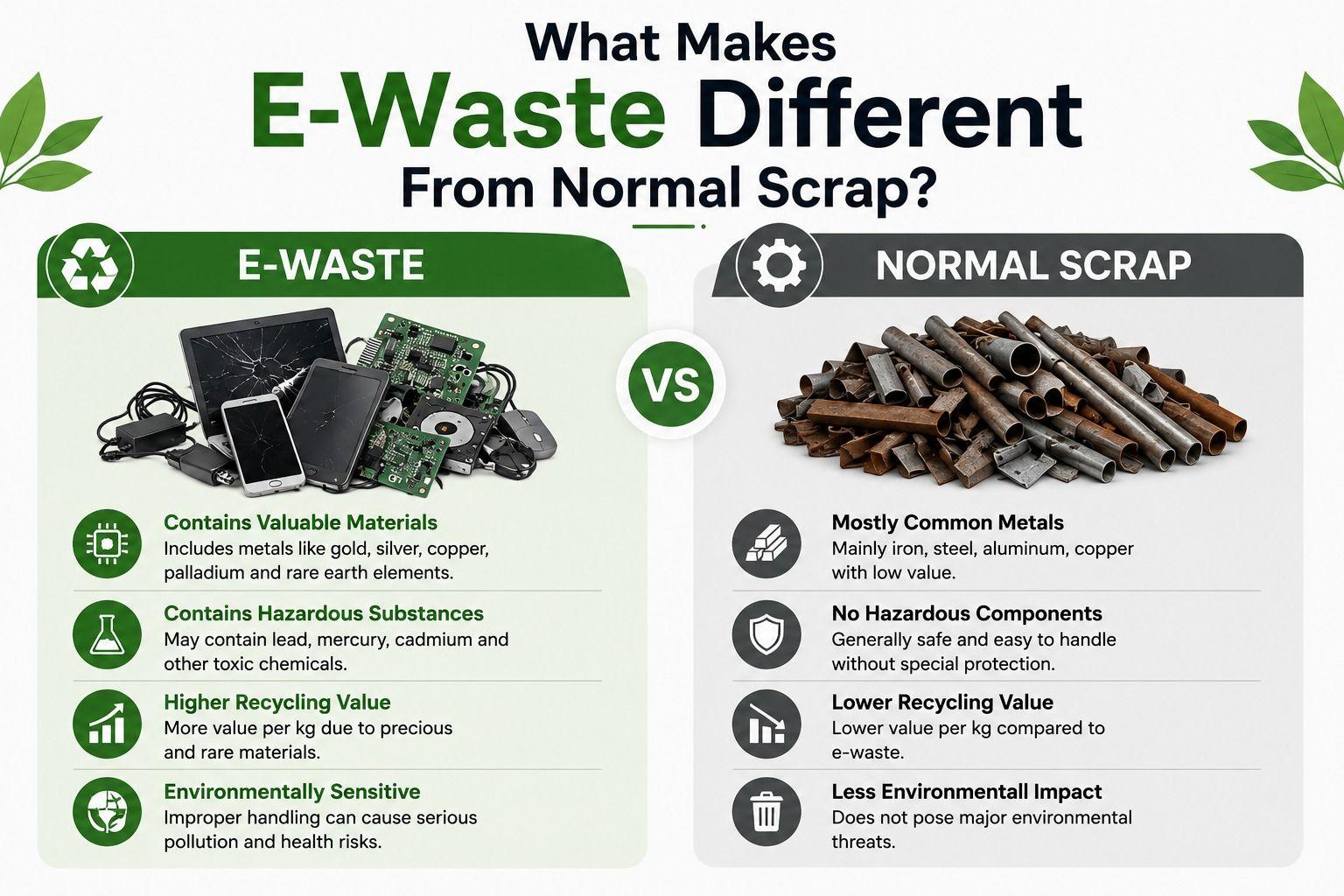
Many people think e-waste is just another type of scrap.
In reality, it is much more complex.
A single computer motherboard may contain:
At the same time, electronic products may contain hazardous materials that require safe handling.
This is why e-waste recycling requires specialized equipment, trained workers and regulatory compliance
Understanding different categories of e-waste helps you decide which business model to follow.
Includes:
These products are among the most valuable because they contain higher quantities of recoverable metals and reusable components.
Examples include:
Includes:
These products contain steel, copper, aluminium and compressors.
Examples:
Although small in size, these devices can contain valuable metals.
Includes:
Battery recycling is becoming an important segment due to increasing use of:
Battery recycling often requires separate technology and compliance because different battery chemistries need different treatment processes.
Not every entrepreneur needs to build a large integrated recycling plant.
Different business models exist depending on your investment capacity.
You collect electronic waste from:
The collected material is supplied to authorized recyclers.
Investment is relatively lower, but revenue depends on collection volume and efficient logistics.
In this model, electronic products are manually dismantled.
Components are separated into categories such as:
These sorted materials are then sold to authorized recyclers or downstream processors.
This is a complete recycling setup.
The plant performs:
This model requires higher investment but offers greater value addition.
Some businesses focus only on:
Specialization can improve operational efficiency and expertise in a specific waste stream.
Many beginners think profit comes only from selling scrap.
Actually, a recycling plant can generate revenue from multiple streams.
Recovered copper from cables, motors and transformers has significant market demand.
Recovered aluminium from electronic equipment can be sold to metal recyclers.
Steel recovered from appliances provides additional income.
Separated plastic can be supplied to plastic recycling companies, depending on the polymer type and quality.
PCBs are often sent to specialized downstream processors because they contain valuable metals and require advanced recovery technologies.
Not every electronic product needs recycling.
Working or repairable products may be refurbished and resold, depending on condition and applicable regulations.
Many corporate customers pay for certified destruction of storage devices before disposal.
This can become an additional service offering if you have appropriate systems and processes.
A professional e-waste recycling plant follows a systematic workflow.
Collection → Sorting → Testing → Dismantling → Component Separation → Shredding → Magnetic Separation → Non-Ferrous Metal Separation → Plastic Separation → Storage → Sale
Let's understand each stage.
Electronic waste is collected from:
Building a strong collection network is one of the biggest success factors in this business.
Without consistent raw material supply, even the best recycling plant cannot operate efficiently.
Collected material is sorted according to product type.
Examples:
Sorting improves processing efficiency and helps identify products requiring special handling.
Some products are still functional.
Testing helps classify items into:
Refurbishing suitable equipment can sometimes provide higher value than immediate recycling.
This is one of the most important stages.
Workers carefully separate components such as:
Manual dismantling improves material recovery and reduces contamination.
After dismantling, suitable materials are processed using industrial shredders.
Shredding reduces material size, making further separation more efficient.
Particle size depends on the downstream separation process and equipment.
The shredded material passes through different separation systems.
These may include:
The objective is to recover cleaner material streams that can be sold or processed further.
Recovered materials are stored separately before being supplied to authorized buyers or downstream processors.
Typical recovered categories include:
Proper storage and traceability are important for inventory management and regulatory compliance.
The machinery required for an e-waste recycling plant depends on the type of electronic waste you plan to process, your production capacity, and the level of automation.
A small dismantling unit may require only basic equipment, while a fully integrated recycling plant needs advanced separation and material recovery systems.
Below is a complete list of machines commonly used in an e-waste recycling facility.
| Machine | Purpose |
|---|---|
| E-Waste Shredder | Reduces electronic waste into smaller pieces for further processing. |
| Conveyor System | Transfers material between different processing stages. |
| Manual Dismantling Tables | Enables safe dismantling of electronic products and component separation. |
| Magnetic Separator | Separates ferrous metals such as iron and steel from mixed waste. |
| Eddy Current Separator | Separates non-ferrous metals such as aluminium and copper. |
| Air Separator | Separates light and heavy materials using airflow. |
| Vibrating Screen | Segregates shredded materials based on particle size. |
| Dust Collection System | Controls airborne dust generated during shredding and processing. |
| Cable Stripping Machine | Removes insulation from copper and aluminium cables for metal recovery. |
| PCB Storage & Sorting System | Stores and segregates printed circuit boards for further processing. |
| Plastic Sorting Unit | Separates different types of plastics for recycling. |
| Baler Machine | Compresses recovered materials into compact bales for storage and transportation. |
| Weighing Machine | Measures incoming raw materials and outgoing recycled products. |
| Forklift / Material Handling Equipment | Handles internal transportation of materials within the plant. |
| Safety Equipment | Protects workers during dismantling, handling, and recycling operations. |
Depending on your business model, you may not need every machine from the beginning. Many startups begin with a collection and dismantling unit and gradually expand into shredding and material recovery as their business grows.
Buying machinery solely based on price is one of the biggest mistakes new entrepreneurs make.
Instead, evaluate machines based on:
A reliable machine with higher recovery efficiency usually delivers better long-term returns than a cheaper alternative.
The investment required depends on several factors:
| Plant Type | Approximate Investment |
|---|---|
| Collection & Dismantling Unit | ₹10 lakh – ₹25 lakh |
| Semi-Automatic E-Waste Recycling Plant | ₹25 lakh – ₹75 lakh |
| Fully Integrated E-Waste Recycling Plant | ₹75 lakh – ₹5 crore+ |
These figures are indicative only. The actual project cost depends on machinery specifications, production capacity, land cost, infrastructure and technology used.
| Expense | Importance |
|---|---|
| Recycling Machinery | Largest capital investment for the plant. |
| Land & Building | Cost depends on plant size and location. |
| Material Handling Equipment | Essential for smooth movement of materials. |
| Worker Safety Equipment | Mandatory to ensure employee safety and regulatory compliance. |
| Collection & Transportation | Major recurring expense for sourcing e-waste. |
| Electricity | Significant operating cost for machinery and equipment. |
| Labour | Monthly recurring expense for plant operations. |
| Pollution Control Systems | Required to meet environmental regulations. |
| Working Capital | Essential for managing day-to-day business operations. |
Space requirements depend on plant capacity.
Approximately 2,000–3,000 sq. ft.
Approximately 5,000–10,000 sq. ft.
10,000 sq. ft. and above.
A well-planned layout should include separate sections for:
Proper workflow improves efficiency while reducing contamination risks.
Power consumption depends on:
Always obtain the exact connected load and running load from your machinery supplier before finalising your electrical infrastructure.
Unlike ordinary scrap trading, e-waste recycling is a regulated industry.
Depending on your business model and location, you may require:
Before starting operations, always verify the latest requirements under the E-Waste (Management) Rules and consult the relevant authorities.
Extended Producer Responsibility (EPR) is one of the most important concepts in India's e-waste management system.
Under EPR, producers of electrical and electronic equipment are responsible for ensuring that end-of-life products are collected and recycled through authorized channels.
This creates opportunities for authorized recyclers because many manufacturers, importers and brand owners require recycling partners to meet their compliance obligations.
Understanding EPR is essential if you plan to work with corporate clients or participate in organized recycling programs.
An e-waste recycling plant must prioritize environmentally responsible operations.
Important areas include:
Following proper environmental practices not only supports compliance but also improves operational efficiency and workplace safety.
Workers handle a wide variety of electronic products that may contain sharp edges, dust and hazardous components.
Every recycling plant should provide:
Regular safety training and standard operating procedures should also be implemented
Recovered materials from an e-waste recycling plant have multiple buyers.
Electrical equipment manufacturers, cable manufacturers and metal recyclers.
Secondary aluminium processors and foundries.
Steel recycling companies and metal processors.
Plastic recycling companies that process segregated polymers.
Authorized downstream processors and specialized precious metal recovery facilities.
Working computers, laptops and networking equipment may be refurbished and sold through refurbishment companies or corporate IT asset recovery businesses.
Diversifying your buyer network helps reduce dependence on a single customer.
The profitability of an e-waste recycling business depends on several operational factors:
A plant with a strong collection network and efficient material recovery generally performs better than one that focuses only on processing capacity.
Without consistent raw material, even the best recycling plant cannot operate efficiently.
Operating without the required registrations and approvals can lead to legal and operational issues.
Collection, transportation, labour and inventory require sufficient working capital beyond the initial machinery investment.
Lower-cost machines may reduce recovery efficiency and increase maintenance costs.
Ignoring safety increases the risk of accidents and operational disruptions.
Many entrepreneurs overlook higher-value opportunities such as refurbishment, data destruction services and specialized material recovery.

Starting an e-waste recycling plant involves much more than purchasing machinery.
StartupHyper helps entrepreneurs understand:
Yes, it can be profitable if you establish a reliable collection network, maintain efficient recovery processes, comply with regulations and build long-term buyer relationships.
A small collection and dismantling unit may require approximately ₹10–25 lakh, while integrated recycling plants require significantly higher investment.
Copper, aluminium, printed circuit boards (PCBs) and certain other recoverable metals are among the most valuable materials, although values fluctuate based on market conditions.
If you intend to operate as an authorized recycler or dismantler, registration under the applicable regulatory framework is generally required.
Yes. Functional or repairable equipment may be refurbished and resold, creating an additional revenue stream alongside material recovery.
The e-waste recycling business is emerging as one of India's most promising recycling industries due to rapid growth in electronic consumption, increasing environmental awareness and stronger regulatory support.
However, long-term success depends on much more than installing recycling machines. A sustainable business requires a dependable collection network, efficient material recovery, regulatory compliance, worker safety, quality machinery and strong relationships with downstream buyers.
Entrepreneurs who focus on systematic planning, operational efficiency and responsible recycling practices will be better positioned to build a scalable and profitable e-waste recycling business.
If you're planning to set up an e-waste recycling plant, StartupHyper can help you understand the machinery, plant planning and business setup required to build a successful recycling operation.
📞Call / WhatsApp: 9472093913
📧Email: info@startuphyper.com
🌐 Website: www.startuphyper.com | www.machinehai.com
🏢 Branches: Patna | Gaya | Katihar | Saharsa
Stay updated with the latest tips, trends, and best practices in factory setup and machinery procurement—subscribe to the StartupHyper newsletter!
No spam, we promise. Your inbox is safe with us—only valuable insights.